What are the Differences Between Bees and Wasps?
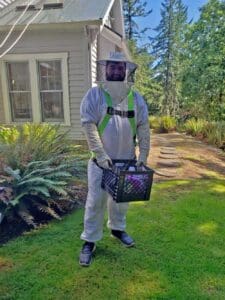
An ominous buzzing followed by a streak of yellow and black – and all of a sudden, it’s panic at the backyard barbeque! Here in the Pacific Northwest, we’re no stranger to stinging insects. With the warm weather of spring and summer comes all manner of creatures buzzing through the air. Our expert discusses bees and wasps and the differences between each.
While the different species of bees serve an incredibly important role for the environment and our everyday lives, the many varieties of wasp are likely to be more aggressive. Knowing how to spot the distinctions between these insects will give you peace of mind outside, so we’ve prepared a guide to help you differentiate between bees and wasps. Our bee expert walks you through the key differences and is always ready to help with advice on safely managing, protecting, and preserving bee colonies.
Read More: Identifying the Wasps of Oregon
Bees Vs. Wasps: How To Tell Them Apart
Bees and wasps look so similar because they are closely related. Both belong to the insect order, Hymenoptera, and share a variety of traits. There’s a vast number of both bee and wasp species, and this can sometimes make correct identification difficult even for the experts. That being said, here are some general ways to tell the two apart.
Appearance of Bees vs. Wasps
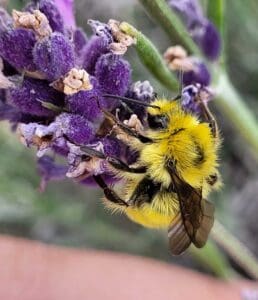
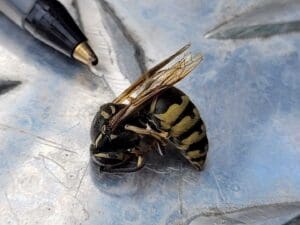
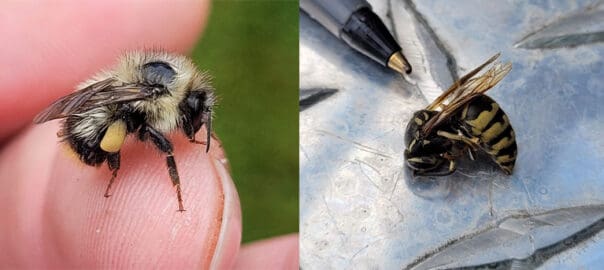
Bees tend to appear more round and large when compared to wasps and are generally thicker through the middle (with bumblebees being especially big and round). Wasps are typically thinner than bees, with longer bodies, legs, and wings. Wasps (especially Yellow Jackets, which are known as the “common wasp”) often have a thin waist where their thorax and abdomen meet.
In regards to color, while both are known for being black and yellow with stripes, this is only sometimes the case. Bees tend to have more tan, brown, or orange coloring mixed into the areas we would normally think of as “yellow,” while wasps are more often the bright yellow we expect.
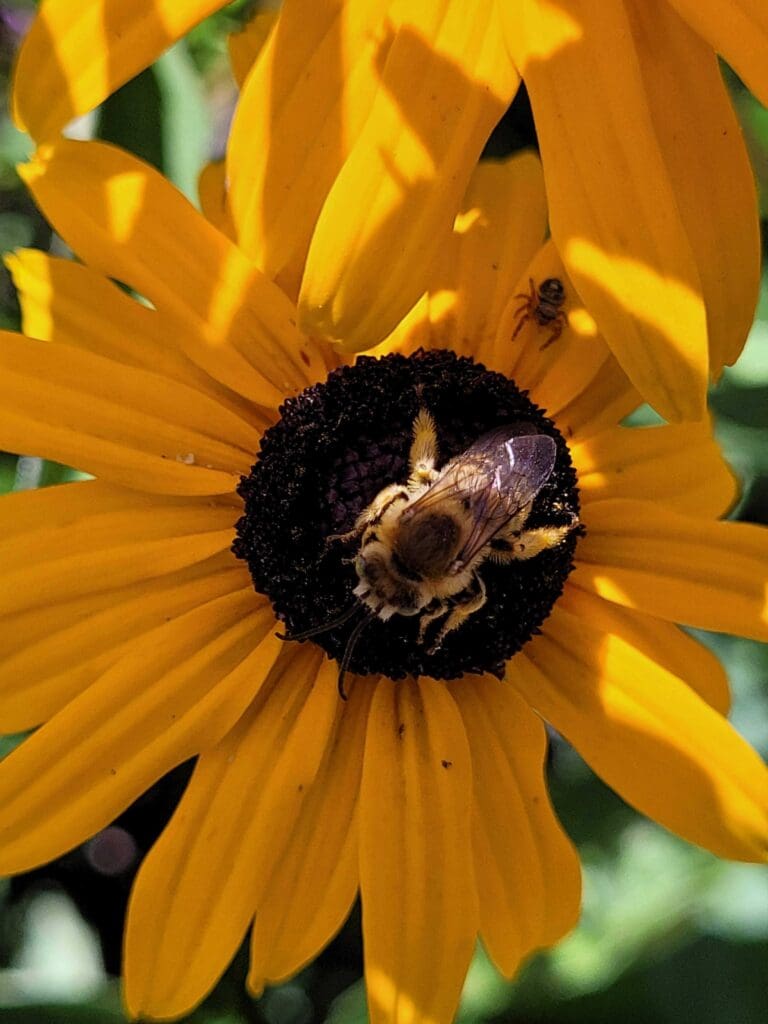
One of the easiest visual differentiators is that bees are most often hairy, while wasps are not.
Do Bees and Wasps Sting Differently?
Probably the difference you’re most concerned with. Both varieties sting, but in different circumstances and with different results. Honeybees, specifically, die upon delivering a sting – unlike wasps and other bees. Wasps can and often will sting a target multiple times, and the venom they deliver is usually much stronger. Bees, even those that can sting multiple times, are largely non-aggressive creatures, and will only sting as a last resort when defending their nest or their life. Even then, bees can be seen issuing warnings to interlopers by flying over or into them before becoming violent. If a bee approaches you away from a hive, they likely don’t mean any harm and shouldn’t be feared. Wasps, on the other hand, can be very aggressive depending on the species and can sting with minimal provocation.
See Also: Hornet Identification and Control
Behavior Differences In Bees and Wasps
As mentioned above, bees tend to be far more cool, calm, and collected than their wasp relatives. As pollinators, bees have important jobs to perform, and it’s very rare for them to go out of their way to be aggressive, especially when unprovoked. Bees don’t like human food, and they can be spotted around flowers and bushes.
Wasps are full of anger, and while one isn’t likely to sting you for no reason, many species are highly aggressive and not afraid of confrontation. Wasps love meat, trash, and human food – so if something is pestering you at the grill or the picnic table, it’s probably a wasp.
Bee or Wasp Problem at Your Home? Get Professional Help, Fast
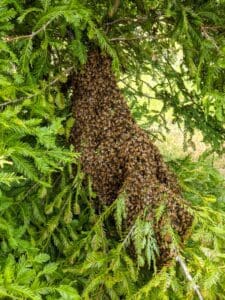
It’s all summer fun and games until you spot an infestation. When bees are swarming or wasps have turned your shed into their new fortress, you want the problem gone, as soon as possible. Because of the threat these pests can pose, it’s always advisable to call in the pros. That’s where Bug Zapper comes in. Our expert staff has experience in dealing with all types of wasp, hornet, and yellow jacket, and our trained beekeepers are masters of beehive relocation. We offer same-day service, and all of our treatments are backed with a 100% satisfaction guarantee. Want the bees, waps, or other pests gone? Schedule a consultation today and let our bee experts put your worries to rest!