Bug Zapper Pest Library
Protect Your Home From Carpet Beetle Damage
Carpet beetles may be small, but they can cause significant damage to carpets, clothing, upholstery, and other natural fabrics. Their larvae feed on animal-based materials, often going unnoticed until visible damage appears.
Know Your Pest
Quick Carpet Beetle Facts
Carpet beetles are common household pests that often enter homes through open windows, flowers, or infested fabrics. Early detection helps prevent costly damage.
Typical Size
2–5 mm Long
Where Found
Carpets & Closets
Most Active
Spring & Summer
Threat Level
Moderate Damage Risk
DIY Difficulty
Moderately Difficult
Nesting Areas
Fabrics & Storage
Carpet Beetle Identification
How To Identify Carpet Beetles
Adult carpet beetles are small, oval-shaped insects with mottled patterns of black, white, brown, or yellow scales. While adults are mostly harmless and feed on pollen outdoors, their larvae are responsible for damaging household items made from natural fibers.
Carpet beetle larvae are brown, elongated, and covered with tiny bristly hairs. They commonly hide beneath furniture, inside closets, along baseboards, and in stored fabrics where they feed unnoticed.
-
Small oval beetles with mottled coloring
-
Hairy brown larvae in carpets or closets
-
Irregular holes in wool, clothing, or upholstery
-
Shed larval skins near infested items
-
Damage to stored fabrics and textiles
COMMON CARPET BEETLE SPECIES
Not Every Carpet Beetle Looks The Same.
Several carpet beetle species can invade homes, but each shares the same destructive larval feeding habits.
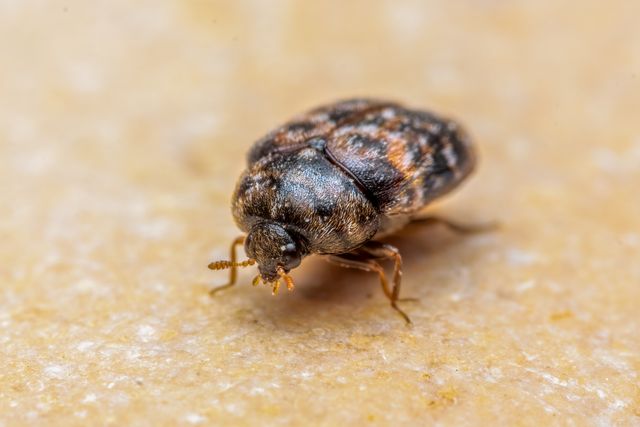
Varied Carpet Beetle
The most common household species, recognized by its mottled white, brown, and yellow pattern. Larvae feed on carpets, clothing, and upholstered furniture.
Size: 2–4 mm
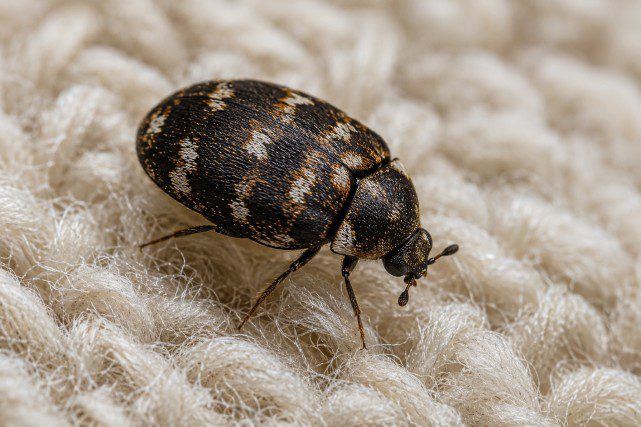
Black Carpet Beetle
Black carpet beetles are solid dark brown or black and produce larvae capable of causing extensive damage to natural fibers.
Size: 3–5 mm
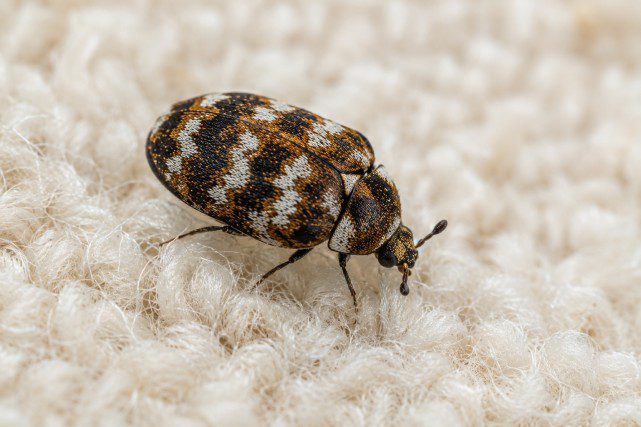
Furniture Carpet Beetle
Often found in upholstered furniture, blankets, and stored fabrics, this species prefers dark, undisturbed areas inside homes.
Size: 2–4 mm
WHAT CARPET BEETLES NEED
Your Home Provides Everything Carpet Beetles Need.
Carpet beetles thrive where natural fibers, organic debris, and undisturbed storage areas provide food and shelter.
Natural Fibers
Wool, silk, fur, feathers, leather, and other animal-based materials provide ideal food sources for larvae.
Organic Debris
Pet hair, lint, dead insects, and dust accumulate in hidden areas and provide additional nourishment.
Warm Indoor Conditions
Consistent indoor temperatures allow carpet beetles to remain active and complete their life cycle year-round.
Protected Spaces
Closets, storage boxes, attics, basements, and beneath furniture offer safe places to develop.
SIGNS OF INFESTATION
Signs You May Have A Carpet Beetle Infestation
Carpet beetles often remain hidden until damage becomes noticeable. Regular inspections can help catch infestations early.
-
Small holes in clothing or carpets
-
Hairy larvae near baseboards
-
Shed larval skins indoors
-
Adult beetles near windows
-
Damaged stored fabrics
-
Pet hair and lint attracting larvae
Carpet Beetle Larvae Cause The Most Damage
Adult carpet beetles are often seen near windows or flowers, but it’s the larvae hiding inside carpets, closets, and storage areas that feed on fabrics and cause the majority of household damage.