CHOOSE YOUR PAYMENT METHOD
×
Pay with Credit Card
Pay with Bank Account (ACH)
Close
TALK TO AN EXPERT
×
[forminator_form id="1909"]
Close
  • Skip to main content
Spring Special: $79 First Treatment (Save $200)
Redeem Offer
  • Services
    • Ants
    • Bed Bugs
    • Cockroaches
    • Fleas
    • General Bugs
    • Moles and Gophers
    • Rodents
    • Spiders
    • Wasps
  • Locations
    • Portland
    • McMinnville
    • Newberg
    • Salem
    • Willamette Valley
    • Eugene
    • Roseburg
    • Southern Oregon
    • Oregon Coast
  • Plans and Pricing
  • Contact us
  • More
    • About Us
    • Blog
    • Commercial Pest Control
    • Frequently Asked Questions
    • Meet Your Technician
    • Pay Bill
    • Privacy policy
541-636-0146

Archives for July 2024

What Do Bed Bugs Look Like?

July 1, 2024 by Jacob Lander

Frequently our phone rings with panicked Eugene residents concerned that they might have bed bugs. Fortunately, most of these homes are found to not actually contain bed bugs after a detailed inspection by our trained technicians. That said, we regularly do treat active bed bug infestations throughout Lane and Douglas Counties.  We’re well aware of what bed bugs look like, and we’ll show you how to identify them.

What Bed Bugs Look Like:
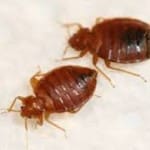
  1. Groupings of black spots that look kind of like mold.  You’ll find these in folds or crevices, particularly around your mattresses.
  2. Small reddish colored bugs about the size of an apple seed or slightly smaller.
  3. Small blood spots on sheets.
  4. Although bites alone are not a certain indicator of bed bug activity, bed bug bites are often found in a series of three grouped red bites.
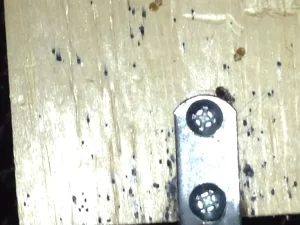
We find that using white or light colored sheets for a week is one of the the easiest ways to find and identify bed bugs.

This bed frame found in a Lane County hotel shows live bed bugs, shed skins and fecal stains.

NOTE:  These Are Not Bed Bugs
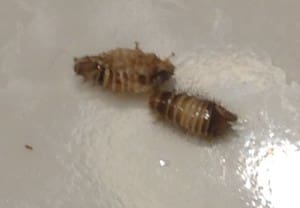
Now that you know what bed bugs look like, you might think you’ve found some.  You should know that bed bugs are often confused with carpet beetles (pictured).  Carpet beetles don’t actually bite people, and the process to eliminate them is totally different. Carpet beetles are often found in windowsills and on the floor near the baseboard behind beds. Carpet beetles are small and look fuzzy.

If You Think You Might Have Bed Bugs Start Here

The first step is to determine if you actually have bed bugs. We treat for bed bugs when we find live bugs. The six most likely places to find live bed bugs are as follows:

  1. In the folds or pleats of sheets and box spring covers.
  2. In seams of mattresses and box springs–especially at the head of the bed.
  3. Under tags on mattresses.
  4. Where the floor and baseboard meet at the head of the bed.
  5. Behind headboards, picture frames or other items on the wall over the head of the bed.
  6. In the folds of sofas where tv watching takes place.

Bites Don’t Equal Bed Bugs

So just to recap, there are several potential causes for red marks or “bites” on human skin. Often actual causes are allergic reactions to something, fleas, mosquitoes or carpet beetles. Therefore a detailed inspection is the first step to locate actual live bugs that could potentially be causing the problems. Once actual insects are located and identified, a treatment plan can be implemented to eliminate the threat. This proven process is the responsible approach that saves money and frustrations for everyone involved.

Let Us Help With A PRO Bed Bug Inspection 

Since bed bugs are so small, our trained eyes can make the whole inspection process much faster and more accurate. Call 541-636-0146 to schedule a Detailed Bed Bug Inspection. We will inspect your home and make suggestions for eliminating or monitoring any pest problems.

Protect your home and family from Bed Bugs. Contact us here or call 541-636-0146 to join our family and experience…

GUARANTEED Bed Bug Elimination System

Locally owned for fast, exceptional service.

5 Star Pest Control Service available in Albany, Ashland, Corvallis, Eugene, Grants Pass, McMinnville, Medford, Newberg, Roseburg, Salem, Sherwood, Wilsonville, Woodburn, Tigard, Tualatin and surrounding areas.

Bug Zapper is the best! My technician is consistently thorough and meticulous. He is courteous and timely, always letting us know that he is on his way to the house. I would recommend Bug Zapper to anyone looking for a great Pest Control service. — Dustin T. — Yelp Review


Call or Text

(541) 636-0146

For Information Today!

Locally owned pest control with same day service— 100% guaranteed!

Learn More
Read Article

Filed Under: Pest Control

What Are Wasps Attracted To?

July 1, 2024 by Jacob Lander

There’s a good chance you’ve seen a wasp or two somewhere near your home and want to determine what brought them there. There are many types of wasps — most are beneficial for controlling other insects — and what they’re attracted to varies with the seasons. Fortunately, finding the source of their attraction can be quite simple. And if not, we’re here to help.

Flowers (and Their Colors and Scents) Bring Wasps to the Yard

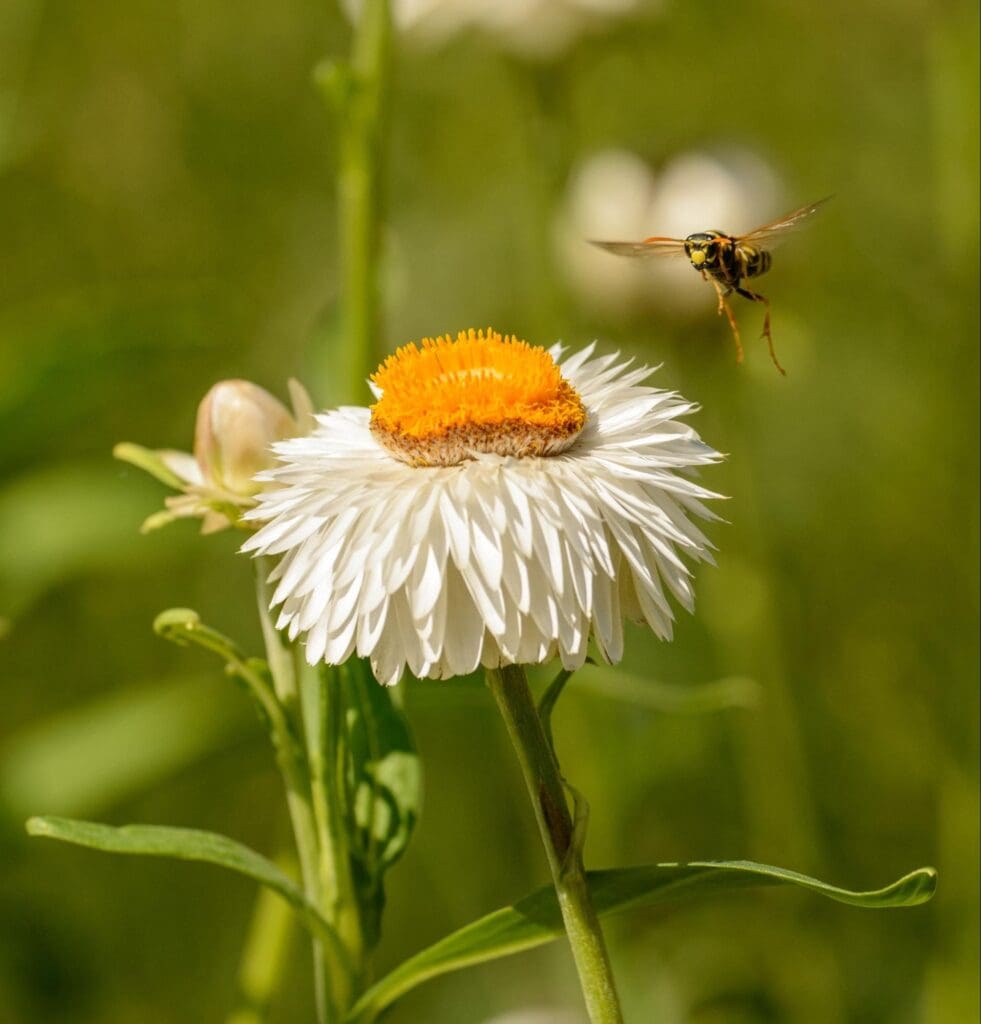
Unsurprisingly, wasps are attracted to flowers. So if you have a bountiful garden, it will no doubt attract wasps, and that is for two reasons: the flowers’ nectar and scent. Nectar is a food source for many wasps, and while nourishing themselves from one flower to another, they’re also helping to pollinate your garden.

You might not realize that wasps have noses and will stop to smell the roses — or anything floral. So if your favorite perfume is plucked straight from a bed of wildflowers, that might be why a pesky wasp seems to be following your every move. But if you prefer earthier scents, either for yourself or in your yard, stick to herbs like mint, thyme, eucalyptus, and citronella. Strong, aromatic scents turn off wasps, so swapping your roses for rosemary is a great way to simultaneously smell good and repel wasps (and other insects!).

And yet, even stranger than a wasp with a nose, their love of flowers also means they’re attracted to bright colors and floral prints. So being mindful of outdoor decor and your garden party wardrobe is key to fending off a swarm of wasps in search of your nectar come spring and summer.

Wasps Look for Sweets and Meats

A wasp’s appetite changes with the seasons. After coming out of winter hibernation, wasps are looking for protein to fill them up, which means you might find them buzzing around your picnics or pet’s food dish, garbage bins, and open compost piles. They’ll also pick up the smell of meat you might be grilling and will know to stick around that area when the next supply is dropped. 

Beyond your and your pet’s food, other insects that serve as a good source of protein for their diet attract wasps. So it’s common to see them hovering aboveground, preying on larvae and grubs inside the soil. In years when cicadas come out from hibernation, cicada killer wasps also come out to hunt them — making for good, albeit slightly annoying pest control.

As for late summer through winter, wasps have a change of appetite and are more interested in sweets that will fill them up while in hibernation. Cans of soda or juice, cakes, and other desserts are favorites of wasps as the weather cools. They’ll also linger around fruit trees, waiting for a piece to fall and break open so they can feast. If you’re dining outside, it’s best to keep food and drink containers covered and to clean up any remnants — even a drop of spilled soda — after you finish. If your yard has any fruit-bearing trees, collecting the fruit before wasps can will help keep them at bay.

Water and Shelter Are Just as Important to Wasps

Even though wasps will sip your sodas and the nectar of your flowers, they still need water to survive. Any lingering puddles or even bird baths attract wasps to come and drink up. Limit any standing water in your yard, or keep it as far from your home as possible. Another helpful way to deter wasps is changing the time sprinklers water your lawn. We suggest watering lawns  before sunrise to conserve water and deter wasp activity.

The same goes for finding a cozy place to live. Wasp colonies are smaller than bees’ and will make a home in just about any nook or cranny, including holes or burrows in your yard. If you notice a lot of wasps and can’t figure out where they’re coming from, inspect your home for any cracks or crevices on the exterior or in trees around your home for a nest. You’ll be surprised at the small spaces these insects will nestle into. However, we don’t recommend removing the nest on your own. Handling a nest of wasps (likely to be pretty angry if you’re moving their home) can be extremely dangerous and requires tools and expertise to be done safely. Attracting wasps isn’t necessarily bad— unless they’re coming for your perfume, they won’t bother you. They just want something to eat. But they may be  bothersome to you, your children, pets, and other insects. Limiting the reasons wasps wish to make your home their own will go a long way.

Wasp Species and Distinct Attractions

Wasps come in many shapes and sizes; each species has unique attractions and behaviors.

  1. Social wasps—paper wasps, hornets, and yellow jackets typically live in a colony, feeding on proteins from dead animals, insects, or leftovers from human meals. These wasps live in small to medium size colonies of a couple individuals or up to a few hundred individuals. They are attracted to wood and plant fibers from which they build their nests, which range from the size of a quarter to a beach ball, and may be hanging from a tree or structure, or concealed underground or in a cavity. Some social wasp species are beneficial, as they are predators of other insect species that can damage crops.
  2. Solitary wasps—some wasps are attracted to plant nectar, pollen, or other insects for food and raising their larvae. As the name suggests, solitary wasps aren’t as aggressive as the others. These wasps live alone, nesting in nests built out of paper or mud, or in cracks, crevices, and small holes. You might sometimes see them carrying blades of grass for their nests. These species are largely beneficial, some even hunt and kill black widow spiders. These wasps constitute the vast majority of species, but are much less noticeable due to their small nests and docile nature.

Key Role of Wasps in Nature: Benefits and Risks

Wasps play a crucial role in many ecosystems, from pollinating plants to preying on harmful pest insects. These stinging insects have many ecological benefits, but they may also carry risks and annoyances for  humans who interact with them.

Ecological Benefits

Wasps are an essential part of the ecosystem in many ways, with some wasps feeding on pest insects like flies and aphids, thereby helping to reduce the population of harmful insects. Wasps also have a role in pollinating flowers, making it possible for plants to reproduce. In many parts of the world, wasps are protected and considered important for biodiversity and a healthy environment.

Wasps also feed on other insects, helping to keep insect populations in check. They are predatory and aggressive when threatened. As stinging insects, they use their stingers as a defensive mechanism. A wasp stings to defend their territory and warn predators, making them essential to the population’s natural defense.

Potential Risks and Annoyances They Can Cause

Wasps can be a nuisance to humans even if they benefit the environment, especially when they build their nests in areas we occupy, such as carports, porch eaves, and other parts of the home.

Touching the Wasp Nest

Never apprehend or touch wasp nests as they are more likely to sting when disturbed—a wasp’s nest is a nurturing place where the queen wasp lays her eggs. 

Try not to disturb wasp nests if you don’t want to get hurt. Like bees, wasp nests serve as a shelter, so removing them will disturb the wasps.

Avoiding the Stings

Wasp stings can cause a range of symptoms, from discomfort to sometimes life-threatening allergic reactions. They range in pain level from extreme, worse than a broken bone, to barely noticeable, similar to a mosquito bite. Some species may also bite, which feels like a very sharp pinch and can even cause a small cut. Wasp species may also become a problem when they swarm and move into large numbers in one area, disrupting those who live there.

Minimizing Risks and Danger

Take measures to make the environment less attractive to wasps, such as removing any food or water sources and sealing any entry and exit points they could use.

Another way of deterring wasps is to avoid attracting them to an area where people will be, such as by wearing floral perfume or eating in areas where wasps are present. Correct practices and precautions can keep wasps away from your home and make people safe.

Wasp Behavior in Seasonal Changes and Other Insects

Being aware of the different habitats and behaviors of local wasps and taking precautions such as eliminating potential food and shelter sources or using repellents is necessary to stay safe during these seasonal changes.

Wasps can adapt to seasonal changes in many ways, though their behavior will largely be determined by their species and the climate in which they live. Generally, wasps will spend the winter dormant in a hibernation-like state, emerging when the temperature rises in spring. But they are more active and visible during the warmer months as they search for resources and look for mates to reproduce.

As they prepare for hibernation, wasps become more aggressive in the late summer and fall. As their food sources dwindle, they become more territorial and may sting if they feel threatened. We can protect ourselves during these seasonal cycles by learning about wasp habits and taking extra precautions.

Relationship with Other Insects

Wasps are predators, with some species also preying on spiders and small mammals. At the same time, they prey on the larvae of different insect species, playing a role in keeping the population of disease-carrying or damaging species in check.

Understanding wasp behavior and its relationships with other insects is essential in determining the best approach to wasp deterrence. With proper precautions, use wasp deterrents like scent-masking repellents, traps, and sealants for protection and to minimize the impact of wasps on ecosystems.

How to Care and Co-exist with Wasps Safely

Wasps play an important role in many ecosystems. However, being aware of what attracts wasps will help you learn to manage them safely. Attractants such as plant nectar, sweet drinks, proteins, and garbage can draw wasps to our home or outdoor spaces. We can better coexist with them by utilizing deterrents, such as masking scents, disposing of trash properly, and not swatting at them.

Understanding wasps and their needs is key to safe, respectful, and harmonious living with these essential insects. But how can you repel wasps? If you need more guidance on wasp treatment and for emergency purposes, give us a call right away.

Call or Text

(541) 636-0146

For Information Today!

Locally owned pest control with same day service— 100% guaranteed!

Learn More
Read Article

Filed Under: Pest Control

Understanding Ant Attraction: What Attracts Ants Besides Food?

July 1, 2024 by Jacob Lander

Ants are fascinating creatures known for their industrious nature and complex social structures. However, when they invade our homes, they become unwelcome guests, foraging for food and water and often building colonies within our living spaces. Food preparation areas, such as a kitchen counter with a few sugary treats or spilled juice, are very appetizing places for ants to collect. 

But we can’t just think of our food as an ant’s only meal source. There’s plenty more to attract and feed them than what didn’t make it into your garbage can. 

In this comprehensive guide, we’ll explore what attracts ants to a home, how they find their way inside, and how to prevent infestations. We’ll also discuss ways to prevent ants from seeking out water in your home and offer advice on safe ant-removal methods, including when to know if it’s time to call for professional pest control.

Why Do Ants Invade Homes?

Ants are primarily attracted to homes for two essential resources: food and water. Understanding their behavior and motivations is the first step in effective ant prevention and control.

Ants can get their food supply from the following:

  • Human food. Ants are opportunistic feeders and will readily exploit any available food sources in your home. This can include crumbs and even pet food left out in the open.
  • Sugars. Many ant types have a sweet tooth. They are attracted to sugary substances like syrups, honey, and sugary drinks.
  • Proteins. Certain ants, like the grease ant, are drawn to protein-rich foods, such as meat, dairy products, and grease.
  • Plant-based foods. Some ants, such as the smelly house ant, are attracted to plant-based foods like fruits and vegetables.

Ants are thirsty little buggers. They require water to survive, so they are naturally drawn to damp areas in your home. Not only are they looking for a drink at the moment, but they actually carry it back to their colonies to store. These are where ants get their water:

  • Moisture. Leaks and high humidity can provide a constant source of moisture. During dry seasons, you may see ants trying to make their way in and spending time under your leaky faucets. Ants will also find moisture—not just food—in your houseplants. 

Condensation. Ants can also extract moisture from condensation on windows, walls, and appliances.

Ants First Need a Way into Your Home

Ants don’t just build colonies underground or in sidewalk cracks. They are one of the most common insects to make your home their own. But before ants can make a snack out of pet food or the droplets of spilled watermelon juice you didn’t notice, they need to find a way inside. Given their size and sheer will, ants won’t have a difficult time finding their way into your home. 

Open windows and doors are the most obvious option and the easiest to remedy. However, they’re savvy enough to find the smallest of cracks or gaps in walls, vents, baseboards, and even foundation walls so they can find a safe place to build their colonies. They want a space that’s warm (and we know that warmth is often provided by a nice, damp room), close to food and water, and dark—and once they’re in, they can cause a lot of damage to walls, wiring, and insulation.

Plants, Trees, and Flowers Are Ant Bait

Although ants might not be the first pests we associate with harming our house plants, they are indeed drawn to them. Flowers and fragrant plants lure ants, and occasionally, ants even act as pollinators. They prefer low-lying plants with smaller flowers, with some exceptions. In particular, ants are most drawn to peonies, which are not known for their small size. These ants can often be seen foraging on flowers, gathering nectar for their food supply.

Ants are highly adaptable creatures with diverse dietary preferences, so another reason you may see ants on your flowers and potted plants is the nectar left behind from aphids. Many ant species, including the notorious Argentine ant, engage in a mutualistic relationship with aphids. Ants “farm” aphids on plants, protecting them from predators and “milking” them for honeydew, a sugary secretion. In return, ants provide protection and even transport aphids to fresh plants. This relationship often takes ants to trees and plants where aphids are present.

They may also be attracted to your plants and trees for a very different reason: these two are a bridge into your home. We’ve already determined that ants want a safe, dark home, and the plant life surrounding you may be their way in. Where possible, creating distance between your home (or any openings in it) and trees or plants will be helpful if you’re noticing an ant infestation.

Dealing with Carpenter Ants and Fire Ants

Carpenter ants and fire ants are two types of ants that can pose specific challenges when they infest homes. Carpenter ants nest in wood and can cause structural damage. To get rid of carpenter ants, locate and remove the nest by following worker ants to their colony. As with other ant species, eliminate moisture sources that attract carpenter ants. And if all else fails, consult a pest-control professional for severe infestations, since locating and treating carpenter ant nests can be challenging.

Meanwhile, fire ants are known for their painful stings and aggressive behavior, but you can control fire ant colonies or mounds with bait or insecticides. Maintain a fire ant management plan for your property to prevent re-infestation.

How to Prevent an Ant Problem in Your Home

Preventing an ant infestation starts with eliminating the reasons for what attracts ants: reducing the ants’ access to food, water, and entry points. Here are some effective preventive measures you can take before you decide to call pest control.

Food Sources

  • Keep all food, especially sweet foods, stored in airtight containers.
  • Clean up crumbs and spills promptly.
  • Avoid leaving pet food out overnight.
  • Regularly clean kitchen appliances, like toasters and microwaves, to remove food residue.
  • Rinse recyclables before placing them in recycling bins.

Water Sources

  • Fix all plumbing leaks promptly.
  • Keep sinks, drains, and countertops dry.
  • Store wet towels and dishcloths in a dry location.
  • Empty and clean pet water bowls regularly.
  • Check for and seal gaps around pipes and drains where ants can access moisture. 
  • Repair leaky pipes and faucets.
  • Use a dehumidifier to reduce indoor humidity.
  • Ventilate damp areas like basements and crawl spaces.
  • Fix roof and gutter issues to prevent water intrusion.

Entry Points

  • Seal cracks, gaps, and holes in your home’s exterior using caulk or weatherstripping.
  • Install door sweeps on exterior doors.
  • Trim branches and vegetation near your home to prevent ants from using them as bridges.
  • Use a commercial or homemade insecticidal soap spray with Castille soap to get rid of aphids infesting your plants.
  • While you can’t stop watering your plants if you want them to survive, you can use an insecticide or diatomaceous earth on the soil, which is safe for people, pets, and pollinators but deadly to ants.

Getting Rid of Ants at Home Safely

When dealing with an ant infestation, it’s crucial to prioritize safety and choose the right approach. Use bait traps and ant baits containing slow-acting pesticides to allow ants to carry the bait back to the nest, effectively eliminating the colony. Avoid using harmful chemicals that can pose risks to pets, children, and the environment. Consult with a pest control professional if the infestation persists or if you have concerns about the type of ant species involved.

When to Call for Pest Control

While many ant infestations can be managed through preventive measures and DIY solutions, there are situations where professional pest control assistance is necessary:

  • If you have a recurring or severe ant infestation that persists despite your efforts
  • If you suspect the presence of carpenter ants, as locating and treating their nests can be challenging without professional expertise
  • When dealing with potentially dangerous ants like fire ants, professional intervention is strongly recommended because of their aggressive nature and painful stings

Getting Antsy Because of Your Ant Situation? Contact Us!

If you’re worried your ant problem is more than just a few bugs surrounding leftover cookie crumbs, don’t try fixing these things by yourself. Let Bug Zapper help you! With our personalized approach, high-quality and effective products, and expertise, we can get rid of your ant problem efficiently. Call us today to learn more about our pest control services.

Understanding what attracts ants to your home, their sources of food and water, and their nesting habits is key to effective prevention and management. By adopting preventive measures, safely addressing infestations, and seeking professional assistance when needed, you can keep your home ant-free and enjoy a pest-free living environment.

Ultimately, ants are looking for the same thing all of us want: a safe, warm place to live and eat. While you shouldn’t make your home any less safe or comfortable, you can make it harder for ants to enter or even less desirable for them to stay long-term.

Call or Text

(541) 636-0146

For Information Today!

Read Article

Filed Under: Pest Control

What Attracts Spiders?

July 1, 2024 by Jacob Lander

Spotting a fast-moving frenzy of legs in the dark corner of the kitchen. Getting caught in cobwebs on your way out to the garage, arguing with a significant other about whose turn it is to kill the fuzzy terror scaling the living room wall. Are you familiar with these spider blues? What attracts spiders to invade your home?

Spiders may keep nuisance pests at bay, but when they get inside your home, they become a nuisance of their own. Only one spider species in the Pacific Northwest is a significant danger, the black widow, but that doesn’t mean you want all the others hanging around your living spaces. Unfortunately, you might be inadvertently inviting these tricksy pests inside! Don’t worry—the talented and tested professionals at Bug Zapper know what conditions attract spiders, and we can help you hang a “No Vacancy” sign on your home this season

But before we become master guards against these crawly spinners, we better equip ourselves with some spider bio, their habitat, and behavior, how they come to crawl spaces in our homes, and types of common house spiders.

Read More: How Do Pests Get Into My House? 

Snippet of a Spider’s Life

When humans think of them, Spiders tend to elicit fear and disgust—but they are a fascinating and diverse class. All spiders have eight legs and two body segments—the first of which is the head and the second containing all the other organs. They have two main types of eyes, primary and secondary. Most have between four to eight primary eyes and use them to detect movement and light. Depending on the species, spiders may also have several hundred secondary eyes, used mainly to distinguish patterns that indicate prey is nearby.

Spiders’ ability to spin intricate webs is their most well-known trait. This ability comes from glands toward the back of the spider’s abdomen, producing liquid silk. When this silk is extruded through the spider’s rear legs, it solidifies into a fibrous web. Depending on the type of spider and purpose, it may be a web to catch prey, shelter itself from predators, or even hitch a ride on a gust of wind.

The wide range of species spans the globe and includes a variety of behaviors and habitats. From the water spiders that make diving bells out of air bubbles while underwater to the spider crabs that feed on dead animals and shellfish, spiders are capable of impressive feats. Another remarkable capability of spiders is their ability to sense vibrations, which are used as a warning of danger or to locate prey.

Do Spiders Hunt?

Because they are predators, they naturally hunt and consume insects. Besides, they use interesting techniques to catch their prey. They may execute their attack by producing a ball of sticky silk containing a chemical that attracts the male moth, playing tricks to lure other spiders, and spitting a gooey but poisonous substance.

Common House Spiders

It may sound freaky when you imagine spiders are creepy crawlers that infest your home. House spiders are naturally found in your attic, basement, bathroom, or any dark and humid space where they hide the most. But before you start hating them, think about the beneficial effects of their existence. They even get rid of insects you want to get rid of—flies and roaches!

Take a peek at a few of the house spiders.

  1. Black Widow—With red markings and a shiny black body and legs, the black widow can be notorious and dangerous and commonly creeps on garages or mailboxes.
  2. Hobo Spider—Just like the Black Widow, the Hobo spider is occasionally seen inside the homes. Eliminate hiding spots and seal cracks, windows, and doors to prevent them from going inside the home.
  3. Wolf Spider—These spider species can be the giant spider crawling around the house. They look like tarantulas but prefer to hide than attack their prey.
  4. American Spider (Grass Spider)—They are known to be fast and funnel weavers. Like most spiders, American house spiders love staying in dark corners.
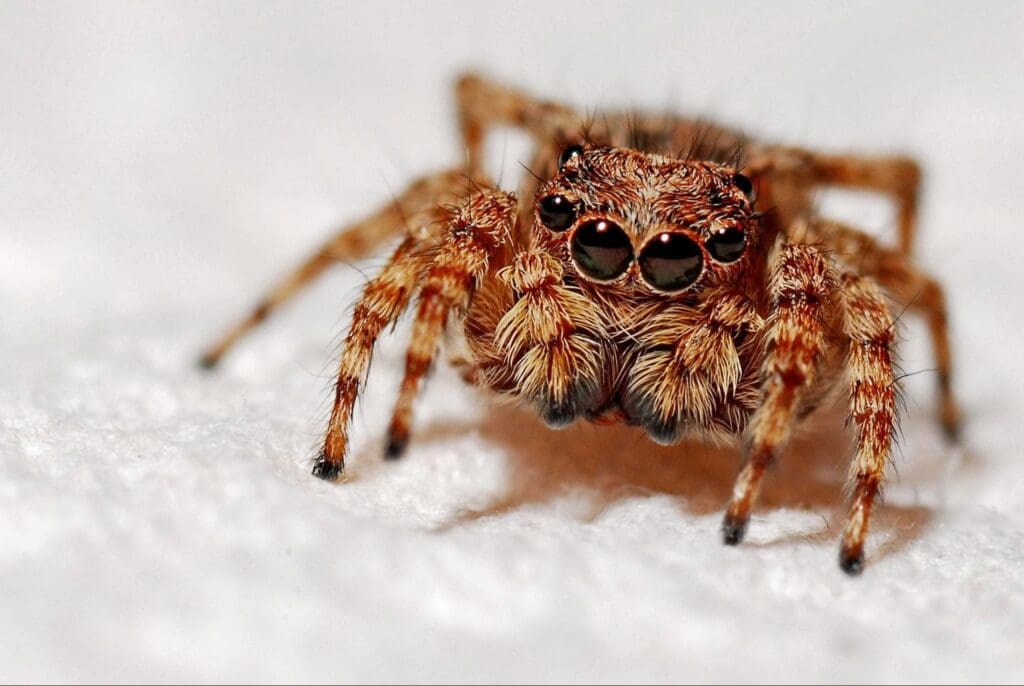
  5. Jumping Spider (Zebra Jumper)—With large scary eyes, you might think these spiders can devour. They are more significant than their counterparts, ubiquitous on ceilings or walls, they stalk with their excellent vision but aren’t harmful unless you attack them.

What Attracts Spiders?

Food, water, and shelter attract spiders. Knowing what they are attracted to can help you better understand why certain spiders end up in your home and how you can keep them away.

1. Food

Like pretty much everything on the planet, spiders are searching for food. Spiders eat insects (as well as other spiders), so anywhere around your property where there’s a large pest population, the presence of spiders is a sure bet. Pest-proofing your home and routine professional control will eliminate the insect buffet and have spiders looking for meals elsewhere.       

2. Seasons and Weather

Seasonal changes or harsh weather patterns will have spiders scrambling for protection from the elements. Many species of spiders enter hibernation in the winter months and seek a warm, sheltered place to do so. Alternatively, in summer, spiders will seek shelter from the intense heat. Heavy precipitation will also cause spiders to move to dry, protected locations. Replacing broken screens and sealing/caulking all gaps and cracks around the exterior and foundation of the home will prevent entry and force spiders to seek shelter elsewhere.

3. Habitat

Spiders breed and make their homes in dark, secluded areas that are adequately sheltered from the elements while providing access to insect food sources. The usual places in a home are basements, attics, crawlspaces, and garages.

Spiders typically like to remain hidden, so the clutter in these home areas further encourages infestation (both from spiders and their food sources). Dampness in the home attracts insects, so all leaks, drips, and sources of excess moisture should be repaired to eliminate spider and insect habitats.

Read More: DIY vs Professional Pest Control

4. Opportunity

Spiders are looking for ease of access. As mentioned, exterior gaps, cracks, and damage should be immediately sealed or repaired to bar access to pests. Despite spiders’ reclusiveness, bright lights at night can draw them to your home. Because insects are attracted to sources of light, so too are their predators—so, in addition to your energy bill, you have another reason not to leave unnecessary lights on at night.

Spiders can use bushes and trees as highways into your home, so keeping all plants and tree limbs a minimum of two feet away from structures is advisable. 

Spiders can also enter your house through outside objects like furniture, clothing, and boxes and even come into a home riding on a Christmas tree. It’s always advisable to keep an eye out when bringing boxes, bags, or other large items inside your home.

Keep Spiders Out, Guaranteed

These fascinating creatures have adapted to live in various environments, overcome obstacles, communicate, and find prey. They are a remarkable class worthy of appreciation and study. But if you are more concerned about what attracts spiders and that they become a nuisance to your home, that’s where we come in.

Even with all the knowledge and preparation in the world, sometimes you just want a bonafide assurance that no creepy-crawly will invade your space. That’s where you need our help. Our team of expert service technicians can crush any spider infestation—we even take all the webs with us free of charge.

Our innovative spider control treatments and methods will eliminate spiders already in your home. Our incredible staff, reliable service, and excellent customer care have made Bug Zapper the #1 ranking pest control service in Oregon – and that’s a 100% guarantee of quality and satisfaction. All that, plus same-day service, means the spiders will be running scared.  If you have questions, concerns, or a desire to live spider-free, Bug Zapper has your back! Contact one of our friendly and knowledgeable technicians today.

Call or Text

(541) 636-0146

For Information Today!

Locally owned pest control with same day service— 100% guaranteed!

Learn More
Read Article

Filed Under: Pest Control

Wasp Nearly Got Me-Look Out This Week!

July 1, 2024 by Jacob Lander

I panicked and started to flail my arms madly. My heart instantly was racing and I felt trapped. Instantly wasp control became my top priority for survival.

Wish I Had Wasp Control For My Truck!

There I was on Wednesday just minding my own business about to leave the Home Depot parking lot. The sun was shining for what seemed like the first time this entire Spring.

I had started my Bug Zapper service truck and rolled down the window to take in some of the warmth and smells of spring. To my horror, out of nowhere came a wasp buzzing up to my open window.

He was so close to my face that I could see his angry eyes twitching. He looked MAD and I just had this awful feeling that he had only paused a moment to decide where to stab that awful harpoon stinger deep into me.

I could feel those beady insect eyes (however many he had) boring in as he picked his target. Was it going to be my arm, hand or face?

I’d already put on my seatbelt so I was a sitting duck…

In a frenzie and mostly out of a pure adrenaline rush I failed my arms as the beast effortlessly buzzed around them faster and faster. It was kind of like when a heat sensor missile looks coordinates on you and you know you’re a goner.   

At that moment I’m just a little sheepish to say I lost it. All my pest control training went out the window and I panicked.

I’m so used to living without wasps at my home (I’d shut off my water before doing without pest control at my house) that I’d forgotten the dread and terror wasps can inflict on their victims.  

With some beautiful sunny days predicted for next week, here are five tips to help you protect yourself.

  1. Right now overwintering queens are starting to build nests
  2. Each day new wasps are being added to the colony
  3. Check out these pictures to identify the stinging insects around your home
  4. Make sure you have an active Bug Zapper wasp prevention plan by calling or texting 541-636-0146

Good Luck

Jacob ‘heart still racing’ Lander

PS. From the picture above I guess you can see who won. Score: Bug Zapper 1 / Wasp 0

Call or Text

(541) 636-0146

For Information Today!

Locally owned pest control with same day service— 100% guaranteed!

Learn More
Read Article

Filed Under: Pest Control

Types of Wasps in Oregon

July 1, 2024 by Jacob Lander

Here in the Pacific Northwest, we have Paper Wasps, Yellowjackets, Mud Daubers, and Hornets. There are a multitude of others (the overwhelming majority) on the fringe that we typically don’t encounter, but the problem is apparent:  In Oregon, many different types of wasps can sting you when harassed. 

While the different species of bees serve an enormously important role for the environment and our everyday lives, a few wasp species varieties can be a source of annoyance and danger, especially when they become excessively common… and with all of them looking so similar, it can be hard to tell which bugs have paid your backyard or picnic a visit.

Nobody wants to take any unnecessary chances with these stinging pests, so we’ve prepared a guide to help you distinguish between the local wasps of Oregon.

See Also: Oregon Bee Relocation

Wasp Identification: Differentiating Common Types of Wasps

Let’s look at some of the most common types of wasps found in the United States and detail their physical characteristics so that you can confidently identify them. So when you come across an odd-looking wasp, at least you have a handful of information about these complex insects.

Paper Wasps

Paper wasps can be visible on tree branches.

Paper wasps are named for their habit of creating papery nests in visible locations. While yellow jackets will build nests below ground or high in trees (out of the same papery pulp substance), paper wasps prefer to build their nests less hidden, on branches, and especially under the eaves of your home, inside dry electrical outlet boxes, and even inside barbecue grills when not in use. Practically anywhere, they can start their nest building in a dry and protected location. 
These hives are most commonly (but only sometimes) found on the south-facing eaves of buildings. You’ve likely seen their handiwork before:

“Nice house, human. Good eaves. My siblings and I live here, too. We’re neighbors.”

Distinct Paper Wasp Behavior and Preference

There are many varieties of paper wasps, but most in the Pacific Northwest look very similar. Yellow jackets and paper wasps are  quite similar, but are  easily differentiated by their body shape, behavior, and nest-building preferences. The latter can be aggressive, though not on the same level as the rage-filled yellow jackets.

Paper wasp hives contain small chambers where larvae grow, bringing about new wasps as they mature. Like most wasps, only the queens survive in the winter, and new queens spread out in the spring to create new nests.

Paper wasps start a new nest yearly, and only the queen survives the winter. These guys aren’t all bad since they kill many flies and other insect pests. The wasp’s nest is simple, with only one layer that opens downward. Cells are uncovered, and nests seldom reach a size greater than 8 inches across with 200 workers.

Yellow Jacket

Perhaps the most feared barbeque visitor, yellow jackets seem to be able to sniff out a tasty watermelon or a juicy hamburger from a block away. Surprisingly, they often live underground or inside wall voids. Yellow jackets construct large, paperlike nests similar to the hornet’s, but their nests can grow to several thousand workers within one season in warmer climates. In the Pacific Northwest they rarely exceed a few hundred.

Dangerous and Territorial Wasps

The most common way humans provoke these wasp types into stinging and aggression is by accidentally stepping on or near the nest entrance or physically bothering one on accident (such as pushing a lawn mower over a hive opening).

Yellow jackets are fiercely territorial and considered highly aggressive. Unlike friendly honey bees, they (and all other wasps) can sting repeatedly, and some can even bite. If you see yellow and black wasps leaving and returning to a hole in the ground or other soft material (like mulch or a mound of debris), you’re likely dealing with yellow jackets. Care should be taken around the nest, as they are provoked quite easily and have been known to sting without noticeable provocation.

New queens are produced within the colony late in the summer, so they demand sugars from the workers for sustenance. These worker yellow jackets forage aggressively for things like soda pop, beer, watermelon, and other favorite picnic items.

Yellow jackets are considered one of the most dangerous wasps, as their sting can cause life-threatening allergic reactions in some victims. Seek help immediately when encountering wasp sting-related emergencies.

Mud Dauber (Mud Wasp)

Although you are very unlikely to get stung by a mud dauber, these wasps appear frightening due to their long legs, extended abdomen, and heavy black coloration. They are often found buzzing around puddles, ponds, and sprinklers collecting mud to build their nests; thus, the name “mud dauber wasps” applies.

Mud dauber wasp nests are often constructed over doorways, under eaves, and outdoor seating areas. The nests are packed with dead insects as food for the emerging young mud daubers when hatching time comes. Mud dauber wasps typically show very little aggression, unlike yellow jackets and hornets. Therefore, they are typically not considered a significant nuisance pest. If left undisturbed, the nests will rarely cause any structural damage to a home or property.

Bald-Faced Hornets

“Hi, there.”

The bald-faced hornet is somewhat misnamed; contrary to its label, it is not an authentic hornet. In fact, it belongs to the family of yellow jackets and wasps. You don’t want to mess with a bald-faced hornet because they’re known for being extra fierce. They can sting through bee suits and shoot their venom (as our technicians have discovered), often aiming for the eyes. Their soccer-ball-sized paper nests house enough workers to do a lot of stinging.

Bald-faced hornets are sometimes referred to as “black jackets.” They differ in appearance, mainly in color, being white and black rather than yellow and black and are much bigger. They are incredibly aggressive and tend to make ball-shaped nests. They build their nests in trees or under the eaves of your home. If agitated, they will attack, and the wasp stings can be numerous. Don’t try to remove these nests unless you wear extensive protective gear or let a professional do it.

See Also: Oregon Hornet Control

Fun fact: Most wasps and hornets are highly attracted to soda cans and metallic chip bags and even have favorite musicians and musical groups.

Queen Killer

When these wasp species reach adulthood and are ready to fan out, looking to build new nests, they will often kill their queen to give new queens a reproductive advantage. It takes only six days for a queen’s eggs to hatch and another eight for the larvae to reach adulthood. A colony can begin and spread to other nests in only two weeks.

One Solution for All Types of Wasps

Due to the possibility of allergic reactions and other severe harm from wasp and bee stings, control for all varieties of wasps and bees is best left to trained pest service technicians. Professionals can access the protective gear, tools, methods, and agents needed to entirely rid your home of these aggressive pests. 

When dealing with wasps and bees, early morning or cooler evening is the best time to approach. Still, a trained professional with access to various tools, methods, and agents is often needed to entirely rid your home of these aggressive pests.

Unparalleled Extermination Service

We are confident that every wasp, hornet, and bee extermination service will be 100% effective. We kill the wasps, remove the nests, and then with our ongoing service package, ensure they never return. Find out more, and schedule a treatment today to eliminate your wasp woes for good!

For more on problems with bees, check out our video on Swarming Behavior, which is very common in the late Spring through Summer:

Call in the experts to handle your wasp problems. Bug Zapper Pest Control knows wasps in Oregon. Our fast, local service technician is ready to help you manage your wasp problems.

Call or Text

(541) 636-0146

For Information Today!

Read Article

Filed Under: Pest Control

Types of Roaches: Understanding Different Roach Species

July 1, 2024 by Jacob Lander

Oregon’s diverse environment is home to various creatures, including several species of roaches. In this blog, we’ll delve into the different types of cockroaches that residents might encounter in the Beaver State.

Identifying the Types of Roaches Found in Oregon

There are three main cockroach species that are prevalent in Oregon. These are the German cockroach, Oriental cockroach, and American cockroach. Let’s take a look at each one.

German Cockroaches

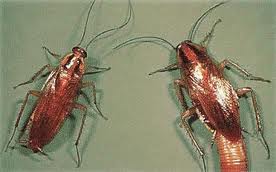
In Oregon, the German cockroach is the most prevalent species. German cockroaches reproduce rapidly and have the potential to infest a home entirely in a short period. It’s not only found statewide but also globally, posing potential health risks, especially to children.

Distinct Characteristics

To recognize a German cockroach, note that adults are smaller than many other roaches, measuring about a half inch in length. Their light caramel-brown bodies are elongated, but the most distinguishing feature is the two dark stripes located just behind their head.

It’s essential to differentiate between young German cockroaches and their mature counterparts. The younger stages are dark and small, lacking the distinctive stripes behind the head. Surprisingly, they closely resemble the young stages of American roaches.

Life Cycle and Reproduction

German cockroach populations undergo a life cycle known as incomplete metamorphosis. It starts from an egg, then the nymph stages, and finally the adult stage. A single female German cockroach can produce several egg capsules in her lifetime, with each capsule containing 30-40 eggs. This rapid reproduction is why infestations can quickly spiral out of control.

Habitats and Hiding Spots

Primarily, German roaches are found inside buildings, but in warmer months and when their numbers swell, they can be spotted outside, especially near trash dump sites and dirty areas. Their preferred habitats are within electronic devices and electrical outlets. 

Initially, they tend to populate kitchens, hiding in electrical outlets, refrigerator compressors, toasters, microwaves, coffee makers, and kitchen cabinets. 

As their numbers grow, German roaches expand their territory, moving to bathrooms and eventually bedrooms. Typically, they’re nocturnal creatures, becoming more active at night, especially when their numbers are few. Daytime sightings often indicate a significant infestation.

Prevention

Understanding their behavior and preferences is key to preventing an infestation. Here are some preventative steps:

  • Maintain cleanliness to deter these pests.
  • Vacuum regularly to remove food particles and potential egg casings.
  • Store food in sealed containers.
  • Promptly repair any leaks to deprive them of moisture.

Remember, German cockroaches are vectors for diseases such as E. coli and salmonella. They can also trigger allergies and asthma, particularly in children.
If you suspect a German roach infestation, it’s crucial to seek professional intervention. These pests are resilient, necessitating specialized treatments. Thankfully, our trained professionals are well-equipped to handle them, understanding their habitats, entry points, and behaviors.

Oriental Cockroaches

The Oriental cockroach is a common pest that can be easily identified by its distinctive appearance and habits. Almost black in color with a penchant for damp environments, these roaches pose potential health risks if they invade living spaces. Here’s what you need to know about identifying this particular pest.

Distinct Characteristics

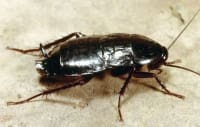
How can one recognize Oriental cockroaches? For identification, focus on their size and color. Oriental roaches are almost black, exhibiting reddish undertones, and measure between 1 to 1.25 inches in length. 

They bear a resemblance to beetles, equipped with wings but lacking the ability to fly. Their bodies are distinctly flat with a glossy exterior. A notable trait is their affinity for moisture, which leads them to frequent areas close to toilets, sinks, and exposed plumbing indoors.

Life Cycle and Reproduction

The life cycle of an Oriental cockroach spans about a year, depending on the environment. The female produces around eight egg capsules in her lifetime, with each containing about 16 eggs. Once hatched, nymphs undergo seven to ten moltings before reaching adulthood.

Habitats and Hiding Spots

Like most cockroach species, Oriental cockroaches thrive on decomposing organic matter, showing a preference for dim, moist environments. While they are predominantly outdoor pests, they commonly inhabit areas like water meter boxes, underneath leaf piles, and in the vicinity of trash containers. 

When found indoors, it’s usually in spaces below the ground, such as basements or crawl areas. Their inability to navigate smooth surfaces can sometimes trap them in bathtubs. A significant concern with Oriental roaches is their penchant for water and sewage, making them potential carriers of harmful bacteria. 

If they invade kitchen areas, there’s a risk of transmitting these bacteria, which can lead to various health issues like food poisoning and gastrointestinal troubles.

Prevention

Often mistaken for palmetto bugs, the Oriental cockroach is a moisture-loving pest that can pose significant health risks if not managed properly. Below are some prevention tips to keep infestations at bay:

  • Manage moisture; use dehumidifiers in damp areas.
  • Fix leaky pipes to minimize water sources.
  • Ensure good ventilation, especially in basements or crawl spaces.

Oriental roaches traverse through sewers and decaying matter, making them potential carriers of germs and pathogens. A clean home is less attractive to these pests and can mitigate health risks.

Should you encounter Oriental roaches in your living space, know that solutions are available. Our technicians utilize professional-grade products to effectively and swiftly eradicate these pests.

American Cockroaches

The American cockroach, often mistaken for a palmetto bug, is a sizable pest distinct in its appearance and behavior. As we delve deeper, we’ll explore their habits and common hiding spots within homes.

Distinct Characteristics

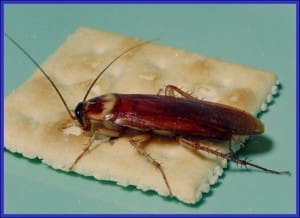
Known for its size, often measuring between 1.5 to 2 inches or even larger, this reddish-brown pest boasts an oval shape and wings that allow it to fly short distances. Although known to dart quickly when exposed to light, it’s not just their speed that’s noteworthy; their feeding habits and preferred hiding spots make them a unique challenge in pest control.

Life Cycle and Reproduction

American cockroach nymphs undergo several molting phases, taking around 600 days to mature into adults. A female can produce up to 90 egg capsules in her life, each containing about 15 eggs. This species has a longer life cycle compared to the German and Oriental cockroaches.

Habitats and Hiding Spots

American roaches have a diverse palate. While they favor decaying organic matter, they aren’t picky eaters. From book bindings and paper to cloth, syrups, and sweets, they can consume a wide variety of materials. 

So where might one encounter these roaches indoors? Typically, they seek out dark, secluded areas. Basements, crawl spaces, and even sprinkler irrigation boxes are among their favored spots. Additionally, they can be found lurking around tubs, inside clothes hampers, drainage pipes, or outdoors under broken concrete.

Prevention

One of the more recognizable types of cockroaches, the American cockroach, is known for its size and speed. While not as rapidly reproducing as the German cockroach, its resilience makes prevention paramount. Below are tips to prevent an infestation:

  • Ensure proper home insulation to deter these warmth-seeking pests.
  • Seal cracks and gaps around the home.
  • Store food properly, using airtight containers.

Like other roaches, American cockroaches can carry pathogens due to their scavenging habits. Regular home inspections and professional treatments can reduce the risk they pose.

Managing American cockroaches requires a strategic approach. Given their adaptability and diverse hiding spots, tailored solutions are essential to tackle their presence effectively if a cockroach infestation has already taken hold. Enlisting professional help can ensure a thorough assessment and application of the most effective treatment to keep these pests at bay.

Are Cockroaches Found throughout Oregon?

Absolutely. Roaches have been found in various cities across the state. The influx of people moving to the Northwest from warmer climates, where cockroaches are more common, has significantly contributed to the rise in cockroach populations.

Both urban areas, including prominent regions like Portland, and rural settings are not immune to these pests. Their prevalence is often linked to areas with suboptimal sanitation, providing them ample opportunities to feed and reproduce. Unfortunately, the inadequate sanitation practices observed in some cities can inadvertently encourage their growth.

However, it’s not just large cities that face this issue. Smaller towns are equally vulnerable. Cockroaches have a knack for infiltrating spaces in numerous ways. They can hitch a ride inside cardboard boxes, groceries, appliances, and other household items. 

Due to their small size, they can easily conceal themselves in minuscule cracks and gaps, finding entry points into homes, which makes professional cockroach control necessary for complete elimination. Once inside, their stealthy nature allows them to remain hidden, often going unnoticed as they prefer dark, secluded spots.

Stop a Roach Infestation in Its Tracks Today

To address this pervasive issue, Bug Zapper offers integrated pest management and cockroach control solutions that are both swift and highly effective. Leveraging our deep knowledge of common cockroach behaviors, we tailor our approach to suit the unique challenges each roach species presents, ensuring complete cockroach elimination from all corners of your home, office, or living space.

Don’t take chances with your health. All roaches spread disease and are nasty. Call us at 541-672-6339 or contact us here to schedule a 100% guaranteed roach cleanout and prevention treatment today.

Locally owned for fast, exceptional service.

Call or Text 541-636-0146 or contact us here to schedule today.

We treat cockroaches throughout Oregon, including Albany, Ashland, Corvallis, Eugene, Grants Pass, McMinnville, Medford, Newberg, Roseburg, Salem, Sherwood, Wilsonville, Woodburn, Tigard, Tualatin and surrounding areas.

Call or Text

(541) 636-0146

For Information Today!

Read Article

Filed Under: Pest Control

Boxelder Bug Oregon: Understanding Stink Bugs and Box Elder Beetles

July 1, 2024 by Jacob Lander

Fall weather is upon us, and for most of us in our great state of Oregon, that means stink bugs and boxelder beetle infestations. What are these bugs, and why do they seem to completely cover some houses and leave other houses untouched? What can you do to protect your home and property from these pests? Here are the facts and the tools you need to never have to deal with these pests again!

What Are Stink Bugs and Boxelder Beetles?

Stink bugs and boxelder beetles are two types of insects that are very similar and, in a lot of cases, infest the same structures at the same time. They are a huge pest for nearly everyone in Oregon because they cover entire sides of homes and enter living spaces in alarming numbers. Both of the st release foul-smelling chemicals when you crush them. Not only do they stink, but they can also leave nasty stains on your drapes and carpets when trying to clean them up.

Fall in Oregon is a beautiful and fun time of year. No one wants to deal with a gross bug infestation in the middle of all their fall activities. Let’s start with some tips to help you accurately identify these insects.

Meet the Stink Bug: Oregon’s Unwanted Visitor

Stink bugs are curious insects that have become quite the unwelcome guests in many Oregon homes. They’re not your typical garden-variety bugs, so let’s dive into what you need to know about them—from their appearance and habits to how you can keep them out of your home.

Appearance and Size

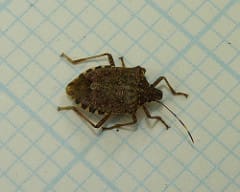
Stink bugs are relatively easy to spot because of their distinct appearance. They’re shield-shaped, resembling a small armored tank, and they’re usually brownish gray with mottled patterns on their backs. Adult bugs are about 0.5 to 0.7 inches long.

Origin and Status in Oregon

Originally from Asia, these bugs hitched a ride to the United States and were actually first discovered in Eastern Pennsylvania in 1998. Since then, they have been making themselves at home across the country. In Oregon, they’ve become a growing concern, particularly in the Willamette Valley and other regions. They have, unfortunately, become a huge household and agricultural pest that can be really frustrating to eliminate.

Eating Habits

These foul-smelling bugs are not picky eaters; they’ll chow down on various plants and crops, making them a nuisance for gardeners and farmers alike. They pierce plant tissues with their sharp mouthparts and suck out the juices, leaving behind discolored and damaged crops and even little wrinkles on the surface of whatever they’re eating.

Mating Habits

These stinky pests mate during the warmer months. Females lay clusters of eggs on the undersides of leaves. When these eggs hatch, the young nymphs go through several growth stages before reaching adulthood.

Colony Formation

Unlike some pests, stink bugs don’t form massive colonies. They’re more solitary insects but can aggregate in larger numbers when they find a suitable spot for overwintering, which is a significant problem in Oregon.

Infesting Homes

These bugs live in weeds, debris, under rocks, and under logs. When fall comes, they flock to locations where they can find warmth and cover to hibernate until springtime rolls around again—like your house or garage.

When colder weather sets in, they seek refuge indoors, often in the fall. They sneak inside through cracks, gaps around windows and doors, and any opening they can find. Once inside, they look for a cozy place to spend the winter.

Preventing an Infestation of Stink Bugs

Now, the million-dollar question: how can you prevent these stinky invaders from taking over your home?

  • Seal bug entry points. Inspect your home for any openings, and seal them up with caulk or weatherstripping.
  • Use screens. Install screens on doors and windows to keep bugs out while allowing fresh air in.
  • Maintain landscaping. Trim back plants, especially boxelder trees, and bushes that may be touching your home, serving as a bridge for insects or bugs.
  • Check produce. Before bringing in garden produce, give it a thorough check for hitchhiking bugs.

Getting Rid of Stink Bugs

If stink bugs have already infiltrated your home, there are a few strategies to send them packing. Remember, squishing these bugs is not recommended—they release an unpleasant odor when crushed, hence the name “stink bug.” The powerful stench is part of a defense mechanism that releases the odor from a gland on the abdomen when the bug feels threatened or when its body is crushed. These nasty bugs’ predators will dislike the taste and spit them out.

Homemade Solutions

  • Catch and release. Capture these bugs using a jar or plastic container, and release them back outside.
  • Soap and water. A simple mixture of soapy water can be sprayed on bugs to immobilize them.

Professional Methods

  • Vacuum. Using a vacuum cleaner with a hose attachment can help you collect bugs safely.
  • Insecticides. Consider consulting a pest control professional who can use specialized insecticides to eliminate these foul-smelling bugs.

Stink bugs in Oregon are definitely not a welcome sight, and there are ways to deal with them. Prevention is key, so seal up entry points, maintain your garden, and inspect produce. If they’ve already infiltrated your home, you can use homemade solutions or consult professionals to help you keep your living space free of these unwanted guests.

Boxelder Bugs: Oregon’s Other Unwanted Houseguests

Let’s talk about boxelder bugs—those pesky insects that can turn your home into their winter getaway. From their quirky appearance to their habits and how to deal with them, here’s your guide to understanding and managing boxelder bugs.

Appearance and Size

Box elder bugs have a unique appearance that makes them stand out. They’re about half an inch long, so they’re not giant invaders. Their bodies are predominantly black with striking red or orange markings, making them quite the eye-catchers.

Origin and Status in Oregon

Box elder bugs are native to the western United States, so they’ve been around Oregon for a while. They’ve also been known to hang out in other parts of the country, like the Midwest.

Eating Habits

Boxelder bugs are vegetarians at heart. They primarily feed on the juices of box elder trees, maple trees, and ash trees. So if you’ve got boxelder trees or a few infested trees close to your home, you may find a boxelder bug or two dropping by to pay a visit. 

Mating Habits

Like most insects, boxelder bugs also have their own love lives. They mate in the spring and lay eggs on infested trees, like the boxelder tree. When the eggs hatch, the young ones, or nymphs, start feeding and growing.

Colony Formation

Boxelder bugs aren’t big on forming colonies like some other pests are. However, when the colder months roll around, they tend to congregate in groups—usually on sunny sides of buildings or infested trees—to bask in the warmth. This behavior can make them look like they’re forming colonies, but they’re merely seeking a cozy spot to chill out during winter.

Infesting Homes

When temperatures drop, the boxelder bug looks for a warm place to hunker down, and that’s often your home. A boxelder bug can slip inside through cracks, gaps in windows and doors, and any tiny openings it can squeeze through. Once it finds a way in, the boxelder bug may decide to spend the winter with you.

Preventing Boxelder Bugs from Entering Your Home

Keeping boxelder bugs out of your home is a game of defense. Here’s how you can do it:

  • Seal boxelder bug entry points. Inspect your home for any openings and seal them up with caulk or weatherstripping.
  • Use screens. Install screens on doors and windows to keep boxelder bugs out while still allowing fresh air to flow.
  • Remove infested boxelder trees. If possible, consider removing boxelder trees, maple trees, and ash trees from your immediate vicinity.

Getting Rid of Boxelder Bugs

If a boxelder bug has already set up shop in your home, don’t fret. There are ways to deal with them.

Homemade Solutions

  • Suck ’em up. A vacuum cleaner with a hose attachment can help you capture boxelder bugs. Just remember to empty the vacuum outside to prevent the boxelder bug crew from crawling back in.
  • Good old soap and water. A mixture of soapy water can be sprayed directly on a boxelder bug to immobilize it.

Professional Methods

  • Insecticides. If you’re dealing with a severe infestation, it’s best to consult a pest control professional who can use specialized insecticides to eliminate boxelder bug infestations.

While a boxelder bug can be a nuisance, it doesn’t pose significant health risks to humans or pets. But if you’d rather not share your home with these colorful critters, use these prevention and removal methods to keep your living space boxelder bug-free.

Need Help? Contact Us Now!

To protect your home from a host of boxelder bug pests, Bug Zapper can inspect and treat your home to prevent problems. Our service includes dewebbing the entire structure using specialized brushes. We also knock down any boxelder bug infestations that are gathering on the sides of your home so we can identify potential exterior entry points.

The next step is to treat the structure with a special mixture of some very effective products. We treat the entire perimeter of the structure so that the bugs are completely blocked from gaining access. We also treat penetration points like doors and windows and under the eaves all around the home.

One issue that can come up when treating boxelder bug infestations is that they have wings. That means they can fly and may completely skip over treated areas instead of physically crossing the perimeter barrier. For this reason, we treat as many areas around the structure as possible. This process is so effective we warranty it 100 percent, and based on infestation levels, booster treatments are performed at no extra charge.

If you find stink bugs or a boxelder tree infested with boxelder beetles on your property, don’t suffer through it. Contact us today!

Locally owned for fast, exceptional service.

5 Star Pest Control Service available in Albany, Ashland, Coos Bay, Corvallis, Eugene, Grants Pass, McMinnville, Medford, Newberg, Roseburg, Salem, Sherwood, Wilsonville, Woodburn, Tigard, Tualatin and surrounding areas.

Call or Text

(541) 636-0146

For Information Today!

Locally owned pest control with same day service— 100% guaranteed!

Learn More
Read Article

Filed Under: Pest Control

  • « Go to Previous Page
  • Page 1
  • Page 2
  • Page 3
  • Page 4
  • Interim pages omitted …
  • Page 6
  • Go to Next Page »

612 SE Jackson St Ste #12 
Roseburg, OR 97470
541-636-0146
Pests Service areas Commercial Plans & pricing
Pay bill About us Contact us FAQs