CHOOSE YOUR PAYMENT METHOD
×
Pay with Credit Card
Pay with Bank Account (ACH)
Close
TALK TO AN EXPERT
×
[forminator_form id="1909"]
Close
  • Skip to main content
Spring Special: $79 First Treatment (Save $200)
Redeem Offer
  • Services
    • Ants
    • Bed Bugs
    • Cockroaches
    • Fleas
    • General Bugs
    • Moles and Gophers
    • Rodents
    • Spiders
    • Wasps
  • Locations
    • Portland
    • McMinnville
    • Newberg
    • Salem
    • Willamette Valley
    • Eugene
    • Roseburg
    • Southern Oregon
    • Oregon Coast
  • Plans and Pricing
  • Contact us
  • More
    • About Us
    • Blog
    • Commercial Pest Control
    • Frequently Asked Questions
    • Meet Your Technician
    • Pay Bill
    • Privacy policy
541-636-0146

Jacob Lander

Getting Rid of Mice

July 1, 2024 by Jacob Lander

First of all, mice are a little dumb, but that fact won’t help much when you have tried everything and are still having trouble getting rid of mice in your home.  What they lack in cleverness, they make up for in tenacity and hunger.

A Few Things You Need To Know About Mice 

  1. Mice can fit through amazingly small holes. Actually 1/4 inch is all they need to wiggle through openings. If you can insert a pencil they can get through.
  2. Mice leave about 50 droppings and hundreds of urine droplets per day, everywhere they travel.  They are high octane machines of digestion.
  3. Mice usually eat within a 10 foot distance from where they nest–including up and down.
  4. Mice prefer to be in contact with something when they travel, so they usually move along walls.
  5. Mice spread lots of dangerous diseases! Having even one mouse in your home can put your family at risk of illness.

Top Places To Look For Mice

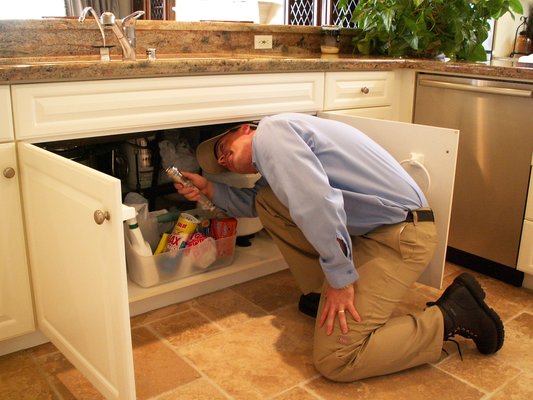
  1. Under kitchen sinks.
  2. Under range ovens.
  3. Behind refrigerators.
  4. Near pet dishes.
  5. Under homes, especially where a garage furnace goes through the wall to the crawl space.

Helpful Hints for Getting Rid of Mice

Most homeowner mouse trapping efforts result in occasional catches, but seldom completely eliminate mouse problems.

Successful mouse trapping that eliminates a mouse infestation begins with a detailed inspection under your home, throughout the home, inside the attic and around the exterior of your home. As you inspect your home look for droppings, brown grease rub marks and evidence of gnawing. Don’t forget to look behind and under stored items. Seldom opened cardboard boxes and cabinet drawers are especially attractive to nesting mice. Corners, shadows and warm spots are other locations attractive to mice. A strong black light in a dark room can be an especially helpful tool for locating travel paths of infesting mice.

Getting Rid of Mice Involves Many, Many Traps

Once you know exactly where mice are traveling, it’s time to bring out the arsenal.  Getting rid of mice has many steps, but trapping is one of the big ones.  Since mice don’t usually travel long distances, careful trap placement is essential to intercept current travel paths. Fast control comes from placing lots of control devices in active travel paths.

Some of the control devices we use include

  1. Snap Traps
  2. Glue Boards
  3. Multi catch Traps–the kind with a revolving door for repeated captures.
  4. Baits–placed only in tamper resistant boxes to prevent accidents involving children, pets or non target animals.
  5. Tracking Powders–only available to licensed professionals.

The number one mistake homeowners make is under-trapping. So, GO CRAZY WITH THE TRAPS!

Final Thoughts On Trapping Mice

For the cost of buying all those traps, spending $500 at the vet when your dog eats some rodent bait and the distress this whole experience is going to cause your home, we think you’ll find our experienced professionals quickly eliminating your mouse infestation to be worth every cent. Actually, only one chewed plumbing or electrical line and you will be money ahead not doing this project on your own–unless you just really enjoy spending time crawling through itchy insulation under your home!

Get A FREE Mouse Inspection

Protect your home and family from mice. Contact us here or call 541-636-0146 to get your mouse problem resolved now…

GUARANTEED Mouse Elimination System

Locally owned for fast, exceptional service.

5 Star Mouse Control Service available in Albany, Ashland, Corvallis, Eugene, Grants Pass, McMinnville, Medford, Newberg, Roseburg, Salem, Sherwood, Wilsonville, Woodburn, Tigard, Tualatin and surrounding areas.

Call or Text

(541) 636-0146

For Information Today!

Locally owned pest control with same day service— 100% guaranteed!

Learn More
Read Article

Filed Under: Pest Control

How Fast Do Cockroaches Reproduce?

July 1, 2024 by Jacob Lander

I saw a German cockroach in my home, and now I am worried. How fast do german roaches multiply, and how long does it take before they overrun my home? Keep reading to learn how fast German cockroach reproduction occurs.

German cockroaches are one of the most common and troublesome pests that infest human dwellings. They are small nocturnal insects that can survive in a wide range of environments and feed on various types of food. One of the main reasons they are so hard to control is their rapid reproduction rate, which allows them to quickly multiply and spread.

How Fast Do German Cockroaches Reproduce?

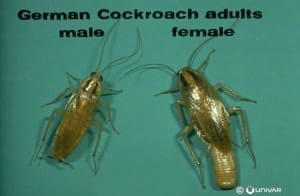
German roaches are among the fastest-reproducing roaches. An adult female cockroach can produce around 4 to 8 egg capsules (called oothecae) in her lifetime, and each capsule contains 30 to 48 eggs. When female cockroaches lay eggs, they carry the ootheca attached to their abdomens until about two days before hatching, and then they deposit the ootheca in a hidden and protected location. The eggs usually take only 20 to 30 days to hatch (although the period may be shorter at warmer temperatures, like inside a home, under a refrigerator, above 77°F). The formation of the next egg capsule usually begins within a couple of weeks. This means that German cockroach reproduction occurs many times faster than that of mice!

Nymphs (babies) reach adulthood in 40 to 125 days, depending on diet quality, crowding, temperatures, etc., and adults can live up to a year. The newly hatched nymphs are wingless and have a pale brown color with two dark stripes on their pronotum (the area behind the head). They molt 6 to 7 times before reaching adulthood, which takes about 50 to 60 days under optimal conditions. During this time, they can feed on almost anything, including crumbs, grease, soap, glue, toothpaste, and even their own molted skins and feces.

German cockroaches have some unique reproductive features that differentiate them from other cockroach species and contribute to their high survival rates and quick infestation. One of these features is their egg carrying pattern: unlike most other cockroaches that drop or glue their oothecae to a surface, German cockroaches retain them until they are close to hatching. This gives the eggs more protection from predators, parasites, and environmental factors. Nature has provided German roaches the means to ensure their survival in a splendid way. Adult females protect their eggs to help ensure hatching and to reproduce at astounding rates.

Egg carrying patterns and rapid reproduction rates allow German roaches to quickly infest a home. Don’t take chances with your family’s health, and learn more about how to recognize German cockroaches in your home.

Other cockroach species deposit their eggs and just hope they hatch. A female German cockroach takes a completely different approach that proves especially effective. Adult females carry the egg capsule protruding from the rear of the abdomen until the eggs are ready to hatch. The baby nymphs may break out of the egg capsule while it is still attached to the female, or she may deposit the capsule in crevices or other protected locations where the young will be able to find food and safety when they emerge.

The German roach is the only common house-infesting species that carries the egg capsule for such an extended period. This egg carrying trait is important because it very effectively prevents the eggs from being destroyed and ensures maximum survival of the young.

Another feature is their ability to reproduce parthenogenetically, which means that a female cockroach can produce offspring and lay eggs without mating with males. This can happen when there is a shortage of males or when females are isolated from them. Parthenogenetic reproduction can increase the population size and genetic diversity of German cockroaches.

Why Is It Important to Deal with German Cockroach Infestation?

A German cockroach infestation poses serious risks and implications for human health and well-being. Because of these roaches’ rapid reproduction, a single female can produce up to 35,000 offspring in one year, creating a large population that competes for food and space with humans.

German cockroaches can also contaminate food and surfaces with their saliva, feces, and body parts, which can carry various pathogens such as bacteria, viruses, fungi, and parasites. Some of these pathogens can cause diseases such as salmonella, typhoid fever, dysentery, cholera, leprosy,, and polio. Moreover, German cockroaches can trigger allergic reactions and asthma attacks in some people who are sensitive to their allergens. These allergens are present in the cockroaches’ saliva, feces, and body parts and can become airborne when the roaches are disturbed or when they die.

It is crucial to take immediate action once a German cockroach is spotted in a home or building. Ignoring or delaying the problem can lead to a severe infestation that is difficult and costly to eradicate. The best way to prevent and control German cockroach infestations is to hire professional pest control services that have the knowledge, experience, equipment, and products to effectively deal with these pests. Professional pest control services can provide timely inspections to identify the source and extent of the infestation. They can apply appropriate treatments such as baits, sprays, dusts, gels, traps, or heat; monitor the results and follow up if needed; and advise on preventive measures such as sanitation, exclusion, and maintenance.

Start Here to Rid Your Home of German Cockroach Infestation

German cockroaches are notorious pests that can reproduce rapidly and cause various problems for humans. These insects have unique reproductive characteristics that make them more resilient and adaptable than other cockroach species are. They can also pose serious health risks because of their potential to transmit diseases and trigger allergies. Don’t get too complacent. Act quickly, and seek professional help when dealing with German cockroach infestations.

If you think you have an infestation of German roaches, then don’t wait! Contact Bug Zapper Pest Control. Let our trained technicians accurately identify possible German roaches and help you find the best solution and prevent an infestation.

Call Bug Zapper Pest Control for an inspection today. We are experts at identifying what type of roach you may have and have the tools and expertise to eradicate roaches from your home.

Locally owned pest control with same day service— 100% guaranteed!

Learn More
Read Article

Filed Under: Pest Control

When Are Fleas Most Active?

July 1, 2024 by Jacob Lander

Fleas are more than an itch-causing nuisance for you and your pets. They can affect your pet’s health and well-being and may cause health problems for you as well. With a moderate climate in Oregon, flea season can unfortunately extend throughout the year.

While these pests can pester you year-round, it doesn’t have to be that way! In this guide, learn key insights about fleas, including their peak activity periods and how you can mount an effective defense against these resilient parasites.

Flea Facts

Fleas are small, flightless insects that survive as external parasites to mammals and birds. They’re wingless, but they’re extreme jumpers with the ability to jump 100 to 200 times their size. There are approximately 2,500 species of these jumping, blood-sucking, itch-inducing parasites.

What causes the bites to itch? When feeding, they release saliva containing an anticoagulant into your bloodstream, making it easier for them to feed. When they’re done, trace amounts of saliva are left on your skin. This is when your body kicks into action, releasing histamine that causes the bite to swell, resulting in the small red bump that is common with flea bites.

If the itching isn’t bad enough, fleas can actually make you or your pet sick. According to the Centers for Disease Control and Prevention (CDC), some fleas in the U.S. carry pathogens that can cause human disease, including plague, flea-borne (murine) typhus, cat scratch disease, and tapeworms.

When it comes to your dogs and cats, flea bites can cause skin irritation and swelling, and some pets can develop an allergic reaction to the bites. This can lead to hair loss or a bacterial skin infection.

Flea Season

Fleas have a pest expectancy or season. In western Oregon’s moderate climate, fleas can stick around all year, becoming most active during the warmer, humid months. Even during colder periods, indoor environments provide perfect conditions for these pests to thrive. This can pose a threat to your family and pets year-round.

Fleas are often found in carpets, furniture, crawlspaces, and your yard. They can also hijack their way into your home on shoes or on your loveable furbabies. Your pets can even pick up fleas from other animals around your yard, such as mice or squirrels.

What makes these pesky parasites so bad is that they have a short gestation period and are fully mature from between eight to 36 days. Adult flea females begin laying eggs 48 hours from their first feeding, which means that a flea infestation can spiral out of control fast.

Flea’s Preferred Conditions

Just like any creature, fleas have certain conditions they prefer. These parasites are most active in temperatures ranging from 70°F to 85°F, with a humidity level of 70%. In such conditions, a flea can complete its life cycle in as little as 18 days.

On the other hand, cold and dry environments slow down the flea’s life cycle and reduce their activity. Indoors, the warm, often humid homes provide the ideal environment for these pests, making them an all-year nuisance.

Fleas are most active at dawn and dusk, coinciding with the activity periods of their preferred hosts (cats, dogs, and other mammals). During these times, they’re on a feeding and breeding frenzy, making them a serious pest.

Oregon’s Flea Pattern

Oregon’s diverse climate makes it an interesting case for flea activity. With its milder temperatures and higher humidity, the western region is an almost year-round playground for fleas.

Flea activity can significantly reduce during the colder months in regions like the Central Oregon plateau or mountainous areas, where winters can be harsh. This leads to a surge in the spring when temperatures start to climb again, continuing well into late fall.

However, remember that indoors in Oregon, particularly in heated buildings, which create a warm, stable environment, fleas bustle about year-round. So, nobody gets a free pass! A year-round, preventative approach to flea control is something all residents should consider.

Signs of Fleas

Recognizing flea infestations earlier is key to managing and eliminating these pesky parasites from your life. Knowing what signs to look for can save a lot of discomfort for both you and your pets and prevent a more troublesome infestation. Let’s take a look at some of these signs:

On Your Pets

Keep an eye on your pets during flea season. If your pet is scratching more than usual, or if you notice adult fleas or eggs on their skin, it’s highly likely that you’re dealing with fleas. Other signs of fleas in pets could include unexplained hair loss, unusual restlessness, or even signs of anemia in severe infestations.

In Humans

Fleas won’t hesitate to feast on humans if they find an opportunity. Look out for itchy red bites, often around your ankles—a surefire sign of fleas. Also, beware of tiny black droppings or flea dirt. These are flea feces composed of undigested blood, a less well-known but equally revealing sign of a flea infestation.

Around the House

Fleas don’t restrict their activity to living beings. They can infest your home surroundings, too. If you spot flea eggs in your carpets or adult fleas in your house, that’s a clear indication of an infestation. Flea eggs are tiny, white, about a millimeter long, and are often found in clusters on carpets, pet’s bedding, or other places your pets frequent.

Remember, early detection can help curb a flea infestation before it takes over. So, stay vigilant to keep these annoying critters at bay.

Getting Rid of Fleas

When discovering a flea problem, you might want to run to the store and stock up on all the bug bombs you can find. Or you might search the Internet for home remedies and DIY sprays. While these might appear appealing, they’re rarely as effective as one might hope (you can read why here).

Flea pupae can remain dormant for months, waiting for the right conditions to emerge. That’s why many infestations seem to reoccur shortly after treatment. Bug bombs, sprays, and home remedies might help to a degree, but rarely do they address these dormant pupae, leading to a potential resurgence of the infestation.

This is where the professionals can help. Bug Zapper Pest Control can help you win the battle against biting fleas with our flea control services. Before we get started, there are a few things you can do as we work together to oust the fleas from your home:

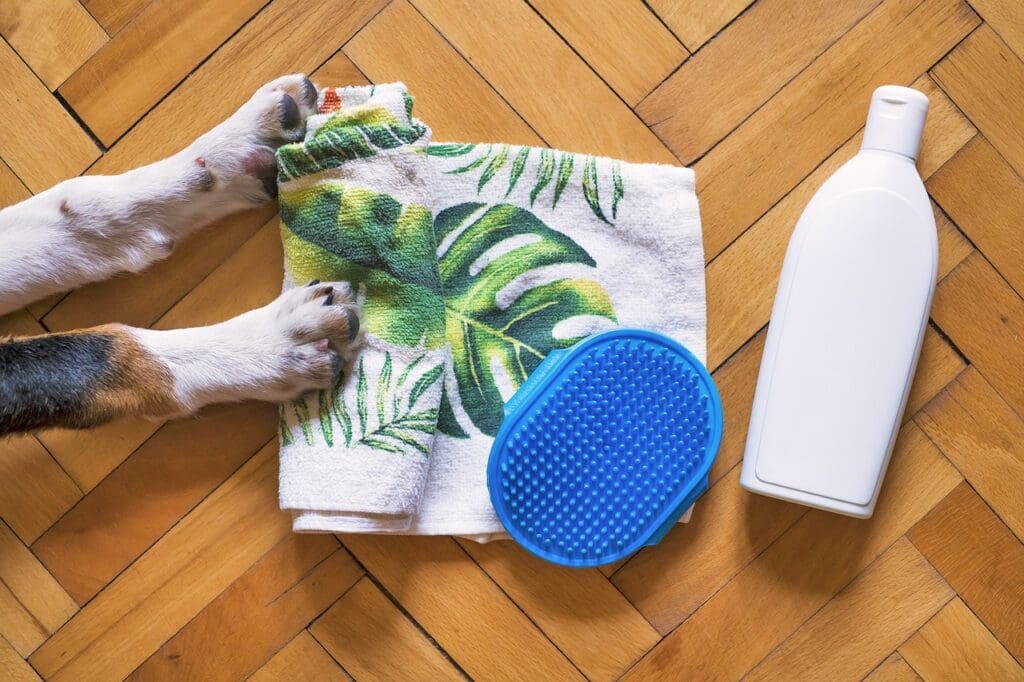
  1. Treat your pets. Use vet-grade flea products and anti-flea shampoos for treating your pets. This can aid in future flea prevention, too.
  2. Wash items. Clean blankets and pet bedding in hot water and dry them on your dryer’s hot cycle to eliminate any fleas or eggs.
  3. Clear floors. Lift all possible small items off floors and place them on beds (we cannot treat beds). Don’t forget items in closets and under beds.
  4. Protect fish tanks. Turn off aerators and cover any fish tanks to safeguard your aquatic life during treatment.
  5. Vacuum thoroughly. Vacuum all types of floors, including wood, carpet, tile, and vinyl. The vibrations may coax fleas out of the pupal stage for better extermination. Post-vacuuming, discard the bag in a sealed plastic garbage bag or clean your bagless vacuum thoroughly.
  6. Plan your schedule. Prepare to be away during and for a few hours after the treatment for safety and efficacy.

Exterminate Fleas for Good with Expert Assistance

While fleas can be tricky to get rid of due to their life cycle, complete flea elimination isn’t a pipe dream. It can be accomplished quickly with the help of trained professionals who know how to use the right products in the right way, along with a multi-tiered management plan for fleas.


We’re here to help! Contact us to schedule flea relief for your pets and family. We also have services to eliminate fleas outside with our permanent pest removal service.

Call or Text

(541) 636-0146

For Information Today!

Locally owned pest control with same day service— 100% guaranteed!

Learn More
Read Article

Filed Under: Pest Control

Bugs with Pincers: Everything You Need to Know about Earwigs

July 1, 2024 by Jacob Lander

Do Earwigs (a.k.a. Pincer Bugs) Really Pinch?

What’s the story of “earwigs”? Do they really get into your ears?

A longstanding rumor is that earwigs burrow into people’s ears to enter the brain, where female earwigs lay eggs. Frightful! If that wasn’t bad enough, the names “Pincer Bug” or “Earwig” accompanied by those prehistoric-looking, gigantic pincers could be pretty alarming. 

Are earwigs dangerous?  Are they helpful?  Are they something we should be concerned about?  Let’s examine facts and fiction about our ancient-looking friend, the Earwig.

All About Earwigs

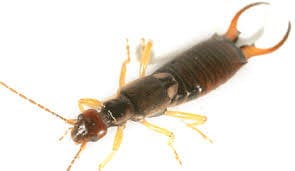
Earwigs are brown bugs with pincers. These pincer bugs seem to pinch with those pair of hook-like “pinchers,” but it doesn’t hurt and this is far from the belief that they get into our ears and brain.

Earwigs tend to hide in dark and damp places during the night. They are nocturnal bugs but can be found anywhere during the day. Most earwigs seek dead wood or plants and musty places like your basement or old wood piles.

Common Myths and Facts About Earwig Pincers

There’s no doubt you have seen pincer bugs before, maybe in your house, the woods, the garden, or basements (I had one crawl out of the endive I purchased at the grocery store once!). 

Here are a few myths—and facts—about earwigs that might ease your concerns.

  • Myth 1: Earwigs burrow or crawl within the ear canal of sleeping people.
  • Myth 2: Their pincers are powerful enough to hurt humans.
  • Myth 3: They stay inside the human brain and lay eggs there.
  • Myth 4: Their bites are poisonous.

Here’s the truth:

  • The very noticeable pincers they sport (called “cerci”) are used primarily for defense but can also be used in mating and to hold prey. Their abdomens are intensely muscular to support the leverage needed to operate the pincers.
  • Their pincers can do little or no harm to you. Not a problem.
  • They have no interest in crawling into your ear and laying eggs. That’s mostly a myth that started based on their name, which comes from Old English.  “Wig” is a modern spelling for a word that primarily means “beetle,” and “ear” likely comes from the fact that their pincers are somewhat like the shape of a human ear.
  • Earwigs are a favorite meal of hedgehogs and yellowjacket wasps among others.
  • They are nocturnal and love damp woods.
  • The common earwigs we typically see have only been in North America for over a hundred years, having arrived here from Europe.
  • Earwigs have been around for a very long time. It’s no coincidence that earwigs seem prehistoric; different suborders have existed since the middle Triassic era.
  • Earwigs have wings and can fly for short durations but virtually never do so.
  • Several suborders of earwigs give live birth.  This is rare in the insect world.
  • They are scavengers and omnivores and will change their diet to suit their environment.

Ways to Prevent Earwig Infestation

Control and prevent earwig infestation in several ways:

  1. Eliminate moisture—Earwigs require moisture to survive, so reducing the dampness and humidity in your home is an excellent place to start.
  2. Seal up gaps and cracks—Earwigs can enter your home through even the tiniest crevices and openings.
  3. Remove potential food sources—Earwigs feed on decaying plant matter, so removing any piles of leaves, wood, plants, or compost away from your home is essential. 
  4. Trap earwigs—If you know where these pincer bugs enter your home, you can set up traps like sticky traps or barriers.
  5. Use natural repellents—Some natural repellents that can be used include diatomaceous earth, garlic spray, tea tree oil, spray a diluted solution of citrus oil, or boric acid. This may help, but don’t expect it to be anywhere near 100% effective.
  6. Call a pest control professional—If you have tried these prevention methods and are still having problems, contact a professional pest control operator to help prevent earwigs.

If earwigs bother you or you have many around your house (especially if you’ve got a yellowjacket problem and the wasps are feeding on earwigs), we have just the service options for you! Our All Pest Plan eliminates earwigs, as well as a variety of other insects with which you might be having trouble.

Give us a call today, and let us handle the dirty work!

5 Star Pest Control Service available in Albany, Ashland, Corvallis, Eugene, Grants Pass, McMinnville, Medford, Newberg, Roseburg, Salem, Sherwood, Wilsonville, Woodburn, Tigard, Tualatin and surrounding areas.

Call or Text

(541) 636-0146

For Information Today!

Locally owned pest control with same day service— 100% guaranteed!

Learn More
Read Article

Filed Under: Pest Control

What are the Differences Between Bees and Wasps?

July 1, 2024 by Jacob Lander

An ominous buzzing followed by a streak of yellow and black – and all of a sudden, it’s panic at the backyard barbeque! Here in the Pacific Northwest, we’re no stranger to stinging insects. With the warm weather of spring and summer comes all manner of creatures buzzing through the air. Our expert discusses bees and wasps and the differences between each.

While the different species of bees serve an incredibly important role for the environment and our everyday lives, the many varieties of wasp are likely to be more aggressive. Knowing how to spot the distinctions between these insects will give you peace of mind outside, so we’ve prepared a guide to help you differentiate between bees and wasps. Our bee expert walks you through the key differences and is always ready to help with advice on safely managing, protecting, and preserving bee colonies.

Read More: Identifying the Wasps of Oregon

Bees Vs. Wasps: How To Tell Them Apart

Bees and wasps look so similar because they are closely related. Both belong to the insect order, Hymenoptera, and share a variety of traits. There’s a vast number of both bee and wasp species, and this can sometimes make correct identification difficult even for the experts. That being said, here are some general ways to tell the two apart.

Appearance of Bees vs. Wasps

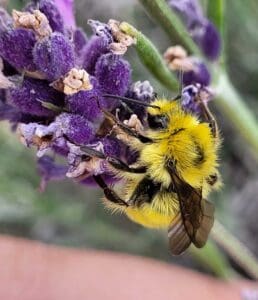
An example of a hairy bee.
A wasp

Bees tend to appear more round and large when compared to wasps and are generally thicker through the middle (with bumblebees being especially big and round). Wasps are typically thinner than bees, with longer bodies, legs, and wings. Wasps (especially Yellow Jackets, which are known as the “common wasp”) often have a thin waist where their thorax and abdomen meet.

In regards to color, while both are known for being black and yellow with stripes, this is only sometimes the case. Bees tend to have more tan, brown, or orange coloring mixed into the areas we would normally think of as “yellow,” while wasps are more often the bright yellow we expect.

One of the easiest visual differentiators is that bees are most often hairy, while wasps are not.

Do Bees and Wasps Sting Differently?

Probably the difference you’re most concerned with. Both varieties sting, but in different circumstances and with different results. Honeybees, specifically, die upon delivering a sting – unlike wasps and other bees. Wasps can and often will sting a target multiple times, and the venom they deliver is usually much stronger. Bees, even those that can sting multiple times, are largely non-aggressive creatures, and will only sting as a last resort when defending their nest or their life. Even then, bees can be seen issuing warnings to interlopers by flying over or into them before becoming violent. If a bee approaches you away from a hive, they likely don’t mean any harm and shouldn’t be feared. Wasps, on the other hand, can be very aggressive depending on the species and can sting with minimal provocation.

See Also: Hornet Identification and Control

Behavior Differences In Bees and Wasps

As mentioned above, bees tend to be far more cool, calm, and collected than their wasp relatives. As pollinators, bees have important jobs to perform, and it’s very rare for them to go out of their way to be aggressive, especially when unprovoked. Bees don’t like human food, and they can be spotted around flowers and bushes.

Wasps are full of anger, and while one isn’t likely to sting you for no reason, many species are highly aggressive and not afraid of confrontation. Wasps love meat, trash, and human food – so if something is pestering you at the grill or the picnic table, it’s probably a wasp.

Bee or Wasp Problem at Your Home? Get Professional Help, Fast

Bee swarm

It’s all summer fun and games until you spot an infestation. When bees are swarming or wasps have turned your shed into their new fortress, you want the problem gone, as soon as possible. Because of the threat these pests can pose, it’s always advisable to call in the pros. That’s where Bug Zapper comes in. Our expert staff has experience in dealing with all types of wasp, hornet, and yellow jacket, and our trained beekeepers are masters of beehive relocation. We offer same-day service, and all of our treatments are backed with a 100% satisfaction guarantee. Want the bees, waps, or other pests gone? Schedule a consultation today and let our bee experts put your worries to rest!

Call or Text

(541) 636-0146

For Information Today!

Read Article

Filed Under: Pest Control

Oregon Poisonous Spiders

July 1, 2024 by Jacob Lander

Hairy large spiders (and let’s not forget the shiny, skeletal-looking spiders) strike fear in the hearts of people all over the world. In Oregon, if you’ve got a spider problem, we definitely have a solution, including ones for Oregon’s most dangerous spiders.

Protect yourself with valuable information about the most dangerous Oregon spiders. A little knowledge never hurts, unless you get it from being bitten by a highly venomous, dangerous spider. These three spiders are commonly brought up in the discussion on Oregon’s dangerous spiders. In this article, we will look at the things you need to know about spiders: how to identify these spiders, where they thrive, and how to treat spider bites.

Brown Recluse Spiders

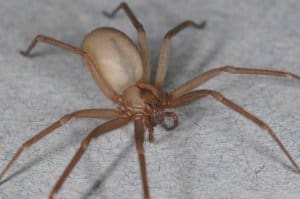
A quick Google Image search of brown recluse spiders reveals images for mature audiences only and is enough to cause nearly anyone emotional trauma for life. We suggest against it if you ever want to sleep again. Brown recluse spiders are reported to inject flesh-eating venom into their victims. No wonder this is perhaps the most feared venomous spider in America. We have some good news for you, however.
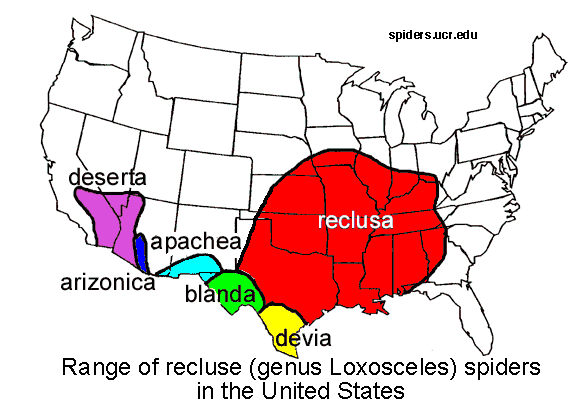
According to the Oregon Department of Agriculture spider identification team, brown recluse spiders are not found in Oregon.

It’s a very commonly held notion that these quiet crawlers are present in Oregon, but this is a case of mistaken identity. Many spiders look similar, but a microscope is generally required to accurately identify a brown recluse spider. This may shed a little light on where they do live: According to the Oregon Department of Agriculture spider identification team, brown recluse spiders are not found in Oregon. It’s a very commonly held notion that these quiet crawlers are present in Oregon, but this is a case of mistaken identity. Many spiders look similar, but a microscope is generally required to accurately identify a brown recluse spider. This may shed a little light on where they do live:

This map shows where Brown Recluse Spiders may actually be found.

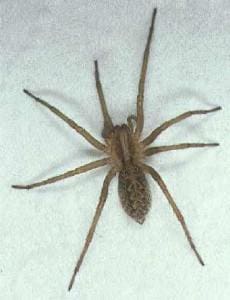
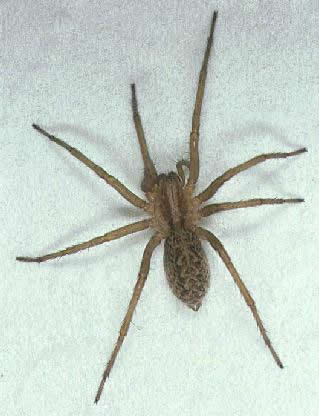
What most people believe to be the Brown Recluse is actually more likely one of the European Hobo spiders, which can certainly be found throughout Oregon.

The Hobo Spiders

Hobo spiders (like the female in the picture on the left) get quite large and often live indoors. They go out at night to look for prey and are usually found on the floor or trapped inside a bathtub. They don’t make obvious webs, but they can climb up walls and across ceilings. Without the aid of high-powered magnification from a microscope or lens, these common Oregon spiders may easily be confused with the giant house spider.

Hobo spiders are not actually more aggressive than any other spider is, and there is considerable controversy regarding how dangerous these spiders actually are to people. While hobo spiders are definitely considered venomous, in Europe they are considered harmless. In America, these spiders may not be as dangerous as is usually presumed, but they may bite humans out of self-defense, so you should still think twice the next time you try to touch what you think may be a giant house spider.

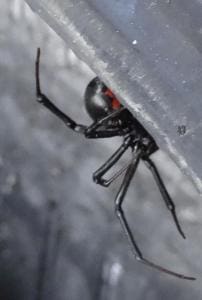
The Black Widow Spider

We frequently see black widow spiders (Latrodectus mactans) throughout Oregon. They are commonly found in wood piles, around the foundation of homes, under eaves, and among stored items. Crawl spaces are a common site, as well.

Black widow spiders build loose, wispy webs that appear as multiple unconnected strands of webbing. These webs have sometimes been described as having been made by a “drunk spider,” and they should be approached with caution. If we were teaching a class on Dangerous Spiders in Oregon 101, the black widow would be half the textbook, and for good reason. Black widow spiders are actually the most dangerous Oregon spiders, and when you find them on your property, they should make you nervous.

Perhaps in our favor, they look just about as dangerous as they are, and they are easy to spot. Females are easily identified by the distinct red hourglass shape on their undersides.

Black widow spider venom causes damage to the nervous system, leading to symptoms such as abdominal cramps, nausea, perspiration, tremors, labored breathing, and restlessness. Bites from black widow spiders rarely result in complications among healthy individuals, but the bites are especially dangerous to infants and the elderly or those with compromised immune systems from other illnesses. Moreover, the symptoms from these bites may last several days.

If you think you’ve been bitten by a poisonous spider—especially if you’re having difficulty breathing or you’re showing signs of shock, seek medical help immediately. Call 911, or go to the nearest poison control center or hospital to get an antivenom vaccine and, possibly, a tetanus shot. You may also need to kill the spider and take it with you to have it identified.

In case a doctor is unavailable, you can do the following first aid measures to alleviate your symptoms and prevent an infection:

  1. Use soap and warm water to wash the affected area thoroughly.
  2. Put an ice pack on the wound to reduce the swelling and the pain. You may also use a cold washcloth if you don’t have an ice pack.
  3. Apply an antibiotic ointment or cream to your wound.
  4. Take a pain reliever (like acetaminophen). You may also need an antihistamine (allergy medication) in case the bite is itchy and swelling.
  5. Make sure to elevate the part or area that was bitten.

Worried about Spider Infestations? Bug Zapper’s Got You!

Prevention is still better than cure, so if you think those eight-legged creatures on your property are any of those venomous spiders in Oregon, contact us today. We provide spider identification services, and our team of expert pest-service professionals are more than willing to answer your questions and assist you in case of threat assessments.

If you want to get rid of these potentially dangerous spiders in your home or if you need a barrier treatment to make sure you are safe from spiders, all you have to do is to reach out to Bug Zapper Pest Control. We have spider treatments that will repel and kill all spiders—even the notorious black widows and hobo spiders. Our treatment includes complimentary exterior web and wasp nest removal, and just like with all our services, we can guarantee you 100%satisfaction. For your safety and peace of mind, call us now!

A Note on Dangerous Oregon Spiders:
If you find one of these dangerous spiders in or around your home, give us a call and we’ll eliminate them for you quickly and easily.

Call or Text

(541) 636-0146

For Information Today!

Read Article

Filed Under: Pest Control

Danger! Fleas Spread Tapeworm!

July 1, 2024 by Jacob Lander

Often customers comment that there pets only have a few fleas so they are not going to worry about treating for fleas. Danger fleas spread tapeworm and other diseases. Beware! If you know how dangerous fleas are you will not tolerate any fleas.

Cat Flea Control

Danger Fleas Spread Tapeworm & Diseases 

Diseases spread by fleas have claimed the lives of millions of people throughout the history of the world. Following are the major diseases fleas spread:

  1. Murine Typhus of Endemic Typhus
  2. Mysomatosis-devastating to rabbit populations
  3. Tapeworm
  4. Plague

From the above list the most commonly spread disease by fleas today in the US is the tapeworm. Although disgusting the tapeworm life cycle and method of spreading is a fascinating display of the intricacies and miracles of nature.

 Fleas Eat Poop!

Adult fleas living on the body of pets, people or other hosts suck blood. Lots of it in fact! The female flea can daily ingest 15 times her body weight in blood. Some of this blood gets used by the adult flea to produce eggs but most of the ingested blood gets pooped out. Flea fecal matter and flea eggs fall to the floor, couch, bed or wherever the host spends the most time. As the eggs hatch and become wiggly worm like things they live in the carpet or wherever they landed. Now for the gross part! Flea larvae eat organic matter including the adult flea poop containing blood.

Flea Control Tapeworm

Tapeworms Are Spread By Fleas-

(Better Put Your Lunch Down For This Part)

Tapeworms can be over a foot long and live inside the small intestine of pets or people. A tapeworm is a long series of segments–each segment equipped with self sustaining systems. The last one (big end in the picture above) is essentially an egg sac filled with tapeworm eggs. When the last section full of eggs breaks off it gets pooped out by the host. Flea larvae living on the ground jump for joy to see the pet poop coming and quickly gobble up the pet poop tapeworm eggs and all.

Eventually the flea larvae that ate the tapeworm egg matures and as an adult begins feeding on the pet’s blood. In a flash the irritated pet licks off the biting flea and swallows him whole. As the flea body is digested the remaining tapeworm egg begins to grow inside the pet. Within only three weeks the new tapeworm will begin releasing segments containing tapeworm eggs to start the cycle all over again. Just make sure you don’t accidentally swallow a flea or you might end up with tapeworm too! That is why if you have fleas, then you might be in danger. Fleas spread tapeworm to people too.

Tapeworm removed from the intestine of a three year old boy!

Moral of the story

Don’t mess around with fleas in your home. There is real danger fleas spread tapeworm, so you could be putting your pets and family at risk. We kill fleas–100% guaranteed. We offer a FREE Flea Inspection. Let our trained technicians accurately identify fleas and  help you find the best flea solution to protect your family.

Locally owned for fast, exceptional service.

5 Star Pest Control Service available in Albany, Ashland, Corvallis, Eugene, Grants Pass, McMinnville, Medford, Newberg, Roseburg, Salem, Sherwood, Wilsonville, Woodburn, Tigard, Tualatin and surrounding areas.
Call or Text

(541) 636-0146

For Information Today!

Locally owned pest control with same day service— 100% guaranteed!

Learn More
Read Article

Filed Under: Pest Control

Kinds of Ants: Identifying Common Ants in Oregon

July 1, 2024 by Jacob Lander

We love living in Oregon! Our mild temperatures make it a great place to call home year-round. But somebody else also loves our temperate climate and high moisture levels: ants. Thanks to its weather patterns, Oregon is home to different kinds of ant species.

Some of the most common species in our state range from bothersome to destructive, so identifying the ants in your home properly is an important step in pest control and extermination. With a little knowledge, you can help prevent an ant colony from becoming an unwelcome houseguest.

What Are the Common Types of Ants in Oregon?

Our certified entomologist reports that the types of ants normally found in and around the Portland, Oregon, area are the following ant species:

  • Odorous house ants
  • Carpenter ants
  • Pavement ants
  • Argentine ants
  • Harvester ants
  • Pharaoh ants
  • Thief ants
  • Velvety tree ants

Odorous House Ants

The most common type of ant in Oregon is the odorous house ant. These black or brown ants travel in colonies ranging from 2,000 to 10,000 members – good luck getting that image out of your head! True to their name, these ants give off a smell similar to rotten coconut or butter, and when left to their own devices, can wreak havoc on your food supply. Odorous house ants are attracted to sweet stuff, and can quickly contaminate large amounts of food – and they can be extremely difficult to remove from your home. Not only will they break off into new colonies to ensure their survival, but they also multiply in number to defend themselves against common over-the-counter ant solutions.

Read More: How to prevent ants from entering your home.

If you are done with ants, try Bug Zapper Ant Control Service

Carpenter Ants

As their name suggests, carpenter ants tunnel through wood structures and nest inside. Measuring 3/8 to 1/2 inch long, carpenter ants are some of the largest ants you will ever see in your home. Unlike termites, carpenter ants don’t eat wood. Rather, they destroy wood structures as they make room for their colony. And speaking of colonies, they can be massive in size: the colonies of carpenter ants can number from ten thousand to fifty thousand ants, usually making their nest in moisture-damaged wood. Carpenter ants can cause major structural damage, so preventive measures are key to protecting your home.

Read More: Carpenter Ant Identification And Prevention Tips

Pavement Ants

Pavement ants live outside and often make their homes by tunneling through soil in the cracks of sidewalks and driveways. These ants are dark in color and can measure between 2.5 and 3.0 millimeters long. Pavement ants are one of the most common home-invading ant species in Oregon. If left untreated, large colonies will split into multiple groups, causing real problems.

If your home has an infestation of pavement ants, it’s definitely time to call in the experts. For eradication to work, the treatment needs to reach the queen ant. Otherwise, more worker ants will be produced, and the ant nests will continue to thrive and wreak havoc on your home.

Argentine Ants

These dark-brown ants are among the different types of ants you may discover at home. They measure 1/4 inch in length and produce a stale, musty odor when crushed. Argentine ants are especially difficult to control because they, like odorous house ants, have many queens spread across an area. This means Argentine ants often create one large supercolony (yikes!) connected by tunnels. Finding and destroying all the ant nests can be difficult and requires professional help.

Harvester Ants

Harvester ants are often mistaken for fire ants because they are also red and can cause painful bites and stings. And while these ants certainly aren’t fire ants, they can cause real damage to your home. These ants collect seeds as their main food source, and they’re infamous for removing all the vegetation surrounding their nests. This can cause large bare spots in your lawn or landscaping.

Harvester ants are known to sting when their nest is disturbed, and these stings can be serious and may require medical attention. So if you see a mound of harvester ants in or around your home, it’s best to leave the extermination up to the experts.

Pharaoh Ants

Pharaoh ants are small, typically about 1/16 inch in length, and range in color from light yellow to reddish brown. These ants typically take up residence in difficult-to-reach places, making them hard to remove. Once in your home, pharaoh ants will attempt to eat household food and can also damage silk, rayon, and rubber goods.

Unfortunately, over-the-counter solutions like Raid or Home Defense are unlikely to solve a pharaoh ant infestation. These ants are extremely sensitive to liquid and aerosol products and are best removed with baiting techniques and other professional services.

Thief Ants

This species of ants is one of the smallest in Oregon. Measuring about 1/32 to 1/16 of an inch long, these tiny insects can easily slip through small cracks to make nests inside your home. These thief ants are aptly named because they tend to nest in or near another ant colony and then steal broods and eggs for their own benefit.

While thief ant colonies tend to be smaller than other colonies on this list, each colony can have several queens, making extermination challenging. Because of their tiny nature and multiple queens, thief ants can establish colonies just about anywhere and can be difficult to detect.

Velvety Tree Ants

Velvety tree ants typically reside—you guessed it—in or on trees, but if conditions are right, they’ll happily move into your home. Once they make it indoors, these ants will likely nest in wet or rotting wood or in moist areas around windows, showers, and leaky pipes.

Encountering velvety tree ants on your property, even outdoors, is cause to call pest control. These ants are known to be aggressive and will bite if they perceive a threat. What’s more, is that their bite is often accompanied by a painful secretion that can cause the wound to sting. When it comes to velvety tree ants, it’s best to leave them to the experts.

Termites vs Ants

You may be wondering if you have termites or ants. Termites are no laughing matter and can do serious damage to your home. Knowing how to distinguish ants from termites can help you determine if your new roommates are here to eat your house out from under your feet or just trying to get into your sugar stash.

How To Identify Ants And Termites

Wondering if you’re seeing carpenter ants, thief ants, pavement ants, or termites? First off, you’ll need to find an unsquashed specimen that can be carefully observed. Termites generally prefer to hide, so obtaining a sample may require some real searching. And before you panic, take a closer look at the insect at hand. It’s not hard to distinguish ants from termites, although a magnifying glass makes this task much easier!

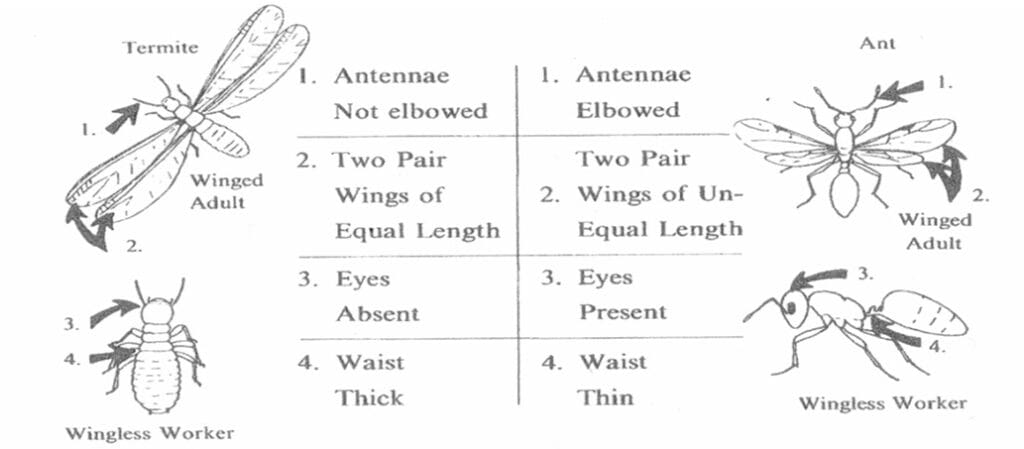
4 Ways to identify ants from termites
  1. Antennae: While both termites and ants have antennae, their structures differ greatly. An ant will have elbowed antennae, while a termite’s antennae will not be elbowed or bent.
  2. Wings: Ants and termites both have two pairs of wings. However, an ant’s wings will be of unequal length, and a termite’s wings will be the same length.
  3. Eyes: This is an easy one! Ants have eyes while termites don’t.
  4. Waist: Ants have noticeably thinner waists than termites, who generally have thick waists.

While it may make you feel better to know if you’ve got ants or termites in your home, in the end, you’re still dealing with an unwanted guest. For your peace of mind, Bug Zapper offers residential carpenter ant control services. If you have an infestation of carpenter or other ants in your home, contact us today! Our specialists can help you find the best solution to protect your home.

Ant Prevention Tips

Thankfully, there are some key steps you can take to prevent odorous ants from entering your home, including these:

  • Caulk around your home’s exterior. You should caulk around window frames, door frames, and plumbing penetrations that enter your home’s exterior.
  • Install a border. Installing a 24-inch border of river pebbles around your home’s foundation can add another barrier of protection around your home. Additionally, you should remove any bark mulch touching your foundation.
  • Trim contact vegetation. Plants and trees act as a stairway for ants seeking to enter your home. Trim plants and tree branches so they do not touch your siding or roof.
  • Remove food sources. Even the tiniest crumbs of food can provide a meal for ants. Mop your floors, wipe down counters, and store food in tightly sealed containers.

Pay attention to pet dishes. Store your pet’s food in sealed containers, and clean up any leftover food that may have spilled from your pet’s dish.

When to Call the Ant-Control Experts

Prevention can be a good step to combat an ant infestation, but once ants have invaded your home, they’re not leaving on their own. And sometimes, home remedies like cinnamon, borax, and Terro even seem to worsen the infestation. Thankfully, odorous house ants are not invincible. Calling a pest control professional for integrated pest management may be necessary for you to get rid of the common types of ants, their colonies, and their queen.

Using advanced training and professional products, Bug Zapper can treat your home to remove odorous house ants and other types of ants, 100% guaranteed. After the initial treatment, we offer affordable regular pest control to make sure odorous house ants never return to your home. Contact us today to learn more about our ant removal services.

Oregon’s Top Pest Control Service

An ant infestation can turn into a major problem. Thankfully, your local pest control service is here to help. At Bug Zapper, we take a personalized approach to pest control, especially when it comes to dealing with different types of ants. Our premium products, responsible application methods, transparency, and expertise come together to solve your issues quickly and efficiently. Call us now to learn more about our pest management services.

Call or Text

(541) 636-0146

For Information Today!

Locally owned pest control with same day service— 100% guaranteed!

Learn More
Read Article

Filed Under: Pest Control

  • « Go to Previous Page
  • Page 1
  • Interim pages omitted …
  • Page 3
  • Page 4
  • Page 5
  • Page 6
  • Page 7
  • Go to Next Page »

612 SE Jackson St Ste #12 
Roseburg, OR 97470
541-636-0146
Pests Service areas Commercial Plans & pricing
Pay bill About us Contact us FAQs