CHOOSE YOUR PAYMENT METHOD
×
Pay with Credit Card
Pay with Bank Account (ACH)
Close
TALK TO AN EXPERT
×
[forminator_form id="1909"]
Close
  • Skip to main content
Spring Special: $79 First Treatment (Save $200)
Redeem Offer
  • Services
    • Ants
    • Bed Bugs
    • Cockroaches
    • Fleas
    • General Bugs
    • Moles and Gophers
    • Rodents
    • Spiders
    • Wasps
  • Locations
    • Portland
    • McMinnville
    • Newberg
    • Salem
    • Willamette Valley
    • Eugene
    • Roseburg
    • Southern Oregon
    • Oregon Coast
  • Plans and Pricing
  • Contact us
  • More
    • About Us
    • Blog
    • Commercial Pest Control
    • Frequently Asked Questions
    • Meet Your Technician
    • Pay Bill
    • Privacy policy
541-636-0146

Jacob Lander

Get Started With Spring Pest Control

July 1, 2024 by Jacob Lander

Winter is finally almost over, and lush green leaves, birdsongs, and warm sunshine are about to fill the air again… but the bugs and pests are coming, too!

Unwanted visitors may already be prowling around the edges of your home, awakened from their winter slumber and searching for weaknesses in your property or structure. Throughout Oregon, spring is the time for many homeowners to start up their pest control program. Here are some tips on getting started, and how you can help get the maximum results from your pest control services from Bug Zapper. The good news is with some simple preventative measures, a little professional help, and a head start, those pests won’t be able to gain an inch in the battle for your home!

Hey, follow me, I know a nice house nearby!

Inspect and Seal Entry Points to Your Home

Most pests that become active in spring are capable of crawling into your home through incredibly small spaces or gaps – and that doesn’t just mean spiders and insects. Rodents like mice can squeeze their bodies to fit into openings as small as ¼ inch! As snow melts and home foundations shift, new gaps, cracks, holes, and other openings can appear in your structures. Homes should be thoroughly inspected for new entry points every spring, both inside and out. Holes or breakages in doors, windows, screens, and moldings should be repaired, and caulk should be used to seal any gaps in the home larger than the end of a pencil. Attic vents, pipe openings, and chimneys should be screened.

If you don’t know where to start, have challenging entry points to find and seal, or if you just have a few questions, Bug Zapper is here to help. No pest exclusion job is too big or too small for our team of licensed, bonded, and fully insured specialty contractors (Oregon CCB #153907). Our results and 100% satisfaction guarantee speak for themselves!

Related: How often do you need pest control?

Eliminate Pest Food and Water Sources

Just like us, pests need to eat and drink to stay alive – and they aren’t going to enter your home merely looking for shelter. Pet food can be a big attractor to pests, and should always be stored inside, in a sealed container. It is also not recommended to leave pet food out overnight. Counters, kitchens, and other eating or dining spaces should be cleared of all crumbs or leftover food residue. Additionally, water and moisture should be managed to eliminate pest drinking and living spaces. Attics, basements, crawlspaces, kitchens, bathrooms, and laundry rooms should all be inspected for the presence of leaks, moisture, or standing water. All leaks or drips should be fixed, and gutters, downspouts, splash blocks, and sump pumps should be checked to ensure that all water is being directed away from homes and structures.

Remove Trash and Debris

Removal of clutter and trash is one of the most effective methods to reduce pest foraging, hiding, and nesting spaces in or around the home. Yards and other exterior areas around the home should be properly cleaned and maintained. Clutter should be removed from basements, garages, and interior spaces. Garbage dumpsters or trash cans should remain closed and properly sealed. Plants and tree limbs should be trimmed away from roofs and exterior walls, and all firewood should be stored at least 20 feet away from the home. Wood, cardboard, and paper products can serve as rodent nesting materials or as food for termites, and should therefore be cleaned up or removed.

Get a Professional Treatment and Inspection

Professional evaluations and treatment plans are the final step to ridding yourself of the most persistent and invasive pests. Bug Zapper service professionals are ready to put their incredible knowledge, training, experience, and grade-A customer service to work on turning your property into a veritable fortress against pest invaders. And at Bug Zapper, no prevention or control solution is ever one-size-fits-all. We work with every customer to tailor-build a treatment plan that fits all of their wants and needs, and every single service provided is backed by our famous customer care and 100% guarantee of quality and satisfaction. Our treatments are safe and effective for you, your family, and your pets. On top of that, pest-proofing also has the added benefit of making homes more energy-efficient and weather-resistant, leading to reductions in heating and cooling bills. We offer prevention services, one-time treatments, and ongoing plans, all at fair and affordable rates.

If you need a little help, or if you just have some questions, please don’t hesitate to contact one of our friendly, expert technicians today!

Related: Rodent proofing your home.

As you can see, the “bite” patterns of Carpet Beetles vs. Bed Bugs, despite being different, still look very similar. They can sometimes be very difficult to determine. Our team of experts can help you determine with certainty which you have.

Locally owned pest control with same day service— 100% guaranteed!

Learn More
Read Article

Filed Under: Pest Control

Spider Control and Elimination

July 1, 2024 by Jacob Lander

Spider control is one of our most-used services, and we’ve got it down to a science.  If you have an eight-legged problem on your hands, we’ve got a multi-tiered solution to rid you of it.  Spider control in Eugene is its own animal and requires a region-specific treatment system.  Some people believe that spiders are overly difficult to control, owing to a few myths about arachnids.  Let’s get one of those out of the way right at the start:

TRUE OR FALSE:

Spiders can’t be eliminated effectively because they don’t clean their feet like other insects.

OUR ANSWER:

Completely false.  The feet-cleaning notion is a somewhat popular myth, with the idea being that they wouldn’t ingest a pesticide because they don’t bring their feet to their mouths, but in fact, when using the absolute best commercial pest control products money can buy,  spiders are one of the quickest and easiest pests for us to eliminate.  Arachnicides are called that for a reason.  When we treat for spiders, they go down fast and they stay gone for a very long time.

Lactrodectus Mactans – Black Widow Spider

Spider Control in Eugene:  How We Take Out Arachnids

Effective spider elimination starts with a detailed interior treatment where an odorless, invisible bug-killing barrier is installed along baseboards, under sinks, in dark corners and around windows. We use only restaurant grade products within homes to protect the safety of pets, small children and the whole family.

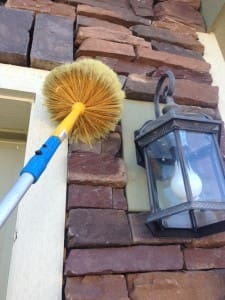
Next up in our spider control system is the exterior.   The outside of all structures are carefully swept to remove spider webs around light fixtures, under eaves and anywhere else webbing may have become attached. This gives you a clean home and gives us an idea of where spiders are most likely to return to your structure.  Removal of webs is part of every future service we provide for you and ensures the exterior of your home always looks its very best.

One of our core values is Attention to Detail and we take pride in maintaining the exterior of every structure we treat perfectly web free–back and front! 

Once all exterior spider webs are removed, a detailed treatment is applied to create a spider-free zone ten feet out from your home. This treatment includes spider killer and spider repellent products specifically formulated to be effective under bushes, around foundations and under eaves. Within minutes spiders, earwigs, wasps, roaches and other insect pests begin dying.  Spider Control in Eugene is our specialty.

New Spider Control Technology

In the past monthly pest treatment was required to repel spiders. New technological advances in commercial pest control products have led to longer lasting products. Once treated, Lane County homes remain spider free zones for two full months. We have found that in Eugene bimonthly (every other month) treatment is the ideal treatment frequency to ensure exceptional spider control around homes.

No Kidding. Our spider extermination system really works. Proven fast results for homes throughout Lane County.

Don’t take chances with dangerous spiders around your home! Contact us here or call 541-636-0146 to schedule a spider cleanout for your home or business.

100 Percent Guaranteed!

 Locally owned for fast, exceptional service.

5 Star Pest Control Service available in Albany, Ashland, Corvallis, Eugene, Grants Pass, McMinnville, Medford, Newberg, Roseburg, Salem, Sherwood, Wilsonville, Woodburn, Tigard, Tualatin and surrounding areas.

Locally owned pest control with same day service— 100% guaranteed!

Learn More
Read Article

Filed Under: Pest Control

How to Get Rid of Moles in Your Yard

July 1, 2024 by Jacob Lander

Well, it’s finally happened. You’ve put months of effort into perfecting your lawn. Your garden is thriving, and your grass has never been greener. But one morning you wake up to find the dreaded mole mounds dotting your yard.

Now you’re wondering how to get rid of moles from your lawn. While you might be tempted to use a tried – and not-so-true – home remedy like chewing gum or car exhaust, now might be a good time to take a breath, identify the source of the moles, and leave the situation to the experts.

Moles in Oregon are a major problem, we know; we receive calls from customers with mole problems daily who want to know if moles can be controlled, and we’ve caught many, many moles. First, let’s take a moment to examine just what a mole is, why it does what it does to your lawn and how to remove moles from your lawn.

What Are Moles?

Contrary to popular belief, moles are not rodents, but insectivores. They’re more closely related to hedgehogs, shrews, and even anteaters than they are to gophers or other rodents. Most of the mole’s closest relatives either live underground or feed there. Moles can be active year-round and are known to occasionally push up a new mound even in snow! They do try to store food for the colder months when their activity will often be subdued, but moles are not above tunneling even in freezing temperatures.

Moles primarily feed on earthworms, beetle grubs, ants, and other arthropods and animals found in the soil. Moles eat just above the grass-root level, creating a trap door effect. As bugs and worms move through the loose soil, they fall into the tunnel system. The moles simply circle around the tunnel system and pick up food – a lot of food. Moles can eat up to a third of their body weight per day – up to 50 lbs of worms in a year! So although it may appear they are eating your plant and grass roots, moles are actually after worms, and in the process of feeding, they inadvertently kill the grass by separating the roots from the soil. In this regard, moles probably serve a check-and-balance role in soil ecosystems and in nature. Their tunnels also provide some aeration, and allow the rainwater to access some areas – and thus probably help to promote plant and tree growth.

When Are Moles Most Active?

You’ll probably notice most mole activity in the spring and fall, especially on damp days or following rain showers. This type of weather makes it easier for moles to tunnel or push up mounds. When the ground surface becomes frozen during winter – or very dry during summer – moles retreat to their deeper burrows. Do mole hibernate? This is a common misconception. Moles do not migrate or hibernate during winter. In fact, they remain active and are able to go undetected in the winter months.

Spring is also mating for moles. Mating occurs during February and March, with a single litter of three to five young born in late spring. Young moles grow rapidly, and they look and behave like adults at about one month old. Young moles may use their families’ burrow system for up to six months before dispersing to establish their own burrow system nearby. So if you notice increased mole mounds or tunnels during the spring, it might be a good idea to take action and contact your local mole removal experts.

Related: Taking Control of Springtime Pests in Oregon

The Facts on Mole Tunnels

While moles serve a vital role in the ecosystem, you probably still don’t want them hanging around your yard. Because once moles have created a tunnel system through your lawn, they’re on a roll – literally. The most prevalent type of mole in our region, the Townsend mole, can dig at a rate of 18 feet per hour. And if they are already inside a previously excavated tunnel, they can run up to 80 feet per minute – forward or backward – underground. And to make matters worse – yes, worse than 80 feet per minute – moles dig two types of tunnels, surface runways and deep runways:

  • Surface runways are feeding tunnels just below the soil surface. They are commonly seen as the raised ridges running through lawn areas. Moles are capable of extending these runways by 100 feet per day! Subsurface runways may be used daily, revisited at irregular intervals, or may be used only once for feeding and then abandoned. Generally, few or no mounds are produced as the result of the production of subsurface runways.
  • Deep runways are located between 3 to 12 inches below the surface. They are used daily as the moles travel to and from subsurface runways. The soil excavated from deep tunnels is deposited on the surface through short, vertical tunnels in volcano-like mounds. Mole mounds, unlike the gopher’s horseshoe-shaped mound with a central round plug, are round and lack any noticeable hole or plug.

Unfortunately, the number of mounds or subsurface runways cannot be used to estimate the number of moles infesting a lawn. Generally, one acre of lawn supports one to three moles at a time – and one mature mole can create a dozen mounds in one week.

Differences Between Moles and Gophers

While gophers prefer vegetation, moles prefer worms and grubs, and occasionally small insects. There are three types of moles in our region, but by far the most prevalent is the Townsend Mole. They range about 5-8 inches, depending somewhat on age, and they are the largest moles in North America. They can dig approximately 18 feet per hour, if needed, and if they are already inside a previously excavated tunnel, they can run up to 80 feet per minute forwards or backward underground. Moles in Oregon seldom leave the protection of their tunnels and do not venture above ground unless they have to (fear of a predator, such as a snake, or flooding of tunnels).

Gophers:

Gophers eat plant matter and unearthing their tunnels often reveals a cache of roots stripped from nearby plants. They often have a density of 30+ per acre and live in short linear tunnels often only 15 feet long. The main tunnel is easily detected due to a series of mounds in an approximate line. Frequently gophers are found on hillsides with dry rocky soil. Gopher mounds are easily identified by their horseshoe shape containing a round plug about three inches in diameter near the center of the mound.

Moles:

Moles seem to be the most evasive of home remedy controls. These little devils can each make hundreds of mounds per year and often only 6 are found per acre. They eat worms and traverse extensive tunnel systems containing deep (10-12″) and shallow (4″) tunnels. Their mounds look like little volcanoes and have an uncanny ability to tunnel along any hard landscaping surfaces like sidewalks or lawn edging.

Gopher Mounds

Mole Mounds

Call In The Mole Removal Experts

We get it: you’re frustrated and ready to try anything to remove moles from your yard. But we’re begging you to put down that bottle of Tabasco sauce. Common “home remedies” to mole infestations are usually ineffective – we’re looking at you, chewing gum, auto exhaust, and dryer sheets – but thankfully, our trained technicians are here to help. At Bug Zapper Pest Control, our trained technicians trap moles and gophers to remove them, with a 100% success rate. We provide mole removal services for city parks, commercial sites, and homeowners. Our success rate is 100%, and often we achieve complete mole eradication overnight or within a few days. And every mole removal service we provide is 100% guaranteed for three full months. So if you’re fed up trying to think like a mole, schedule an appointment with us today.

The first step to winning the war on moles and gophers is contacting us for a free estimate. We know how to get rid of moles and gophers promptly and expertly.  Cleanout trapping service starts at $295 and is based on yard size and infestation density.

Contact us to learn more about mole removal and additional pest removal services Bug Zapper Pest Control provides.

Call or Text

(541) 636-0146

For Information Today!

Locally owned pest control with same day service— 100% guaranteed!

Learn More
Read Article

Filed Under: Pest Control

Pacific Northwest Rodents Part 2 – Mice

July 1, 2024 by Jacob Lander

When it comes to rodents in the Pacific Northwest, mice are abundant and one of the most prolific breeders you may encounter.   We’ve covered rats, and now it’s time to shed a little light on mice.  Specifically, lets look at the three species you’re most likely to encounter in our region.  If you live in Lane, Linn, Benton, Josephine or Douglas counties, you’ve got northwest mice all around you.  The Willamette Valley, in particular, is nationally known as an extremely successful breeding ground for mice and is one of the most prolific hotspots for mouse activity on the west coast.

All it takes is an ample food and water supply to convince mice that your home or commercial structure is the perfect place for them to settle down and live out their version of the American Dream (it’s just like our version, but without college loans or cars).

“That’s not true. I went to Landfill University; Breeding Arts major. Go Housecats!”

About Northwest Mice

The mouse is one of the most prevalent rodents on earth, and mentions of them can be found thousands of years back.  Originally located in Asia, they have spread far and wide.  With the help of unwitting human commerce and travel, they have managed to span the globe and have easily been as successful as rats in populating every corner of the world.  Unlike rats, however, there are far more domestic species with which to contend.  For our purposes, we’ll focus on the three most common in our region:  house mice, white-footed, and deer mice.

The House Mouse (Mus musculus)

The common house mouse, unlike other kinds, has adapted to live mainly off of us, rather than in the wild.  While they are “wild” creatures, their subsistence depends heavily on human dwellings and commercial businesses as food sources.  Of important note is that the house mouse is also the basis for lab tsting, though these have been bred for specific traits useful in science (for instance, lab mice are almost exclusively all white).  The house mouse is the most common kind of mouse we see in the Pacific Northwest, and as such, we’ll focus much of the article on this particular species.

Some Interesting Facts about House Mice:

They are coprophages (they will eat their own feces).  They do this to harvest the nutritive bacteria that grows in it.

They are typically nocturnal, preferring dark environments, and do not like bright light.

Females have 5 nipples while the males have none.

Contrary to popular belief, house mice are not strong vectors for diseases that can be spread to humans.  There are a few rare instances, and some not-very-harmful diseases that are also rare, but in general, they aren’t known for spreading human disease much.

Males are usually very territorial, living with several females, though they do often appear to respect the territorial boundaries of one another and fights between males over space are uncommon.

Mice cannot vomit.

Mice and rats are (typically) mortal enemies and rats are able to kill mice quite easily.

They are not well-suited to surviving away from human settlements, especially where competing mice (like wood or deer mice) are found.

Encountering the odor of unfamiliar male mice can actually terminate pregnancies, which is why the males are so fiercely territorial.  Even the smell of a single male just passing through can complicate the life of a nesting brood heavily.

Lab Mice

Features:

An adult house mouse typically ranges from about 3-4 inches in length, not including the tail, which is shorter in colder regions, and thus, longer in warmer regions.  Interestingly, the length of tail is not genetic, but rather an aspect of mouse physiology that occurs after birth, depending on the environment.  Their tails are extremely versatile and well-suited to mouse survival.  The tails serve as balancing tools when navigating various types of terrain, as a brace when standing upright, as a communication tool for other mice, and also as a natural thermostat.  Mice help regulate their temperature by speeding or slowing bloodflow to their tails.  They generally stand upright, balancing on their tails, when eating, and they will often stand upright when orienting themselves to their surroundings.

Social Life and Behavior

House mice use a social hierarchy when food is abundant (in your house, for instance) and do not stray far from their food source.  They imbed and develop a social structure when living off of humans.  This is called commensalism.  When not subsisting in your home, however, or when wild and still scavenging for unknown foods, their social structure dissipates and they have broad travel spans.  They will cover a large range of habitat and are far more aggressive, particularly females.  Males, when commensal, will often leave their birthplace to set out and found new territory, while females will typically remain in the origin nest, mating with other mice and, in particular, her offspring.  Most mouse infestations are comprised entirely of related mice, though it is possible for outsider mice to enter into the population.

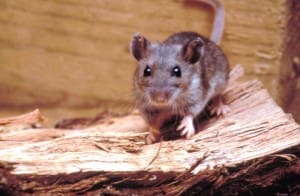
House Mouse

Mice, like rats, do not like being far from vertical surfaces.  This penchant for preferring close proximity to vertical climbing terrain is called thigmotactism, and it is a common feature of many rodents, including also voles.  They sleep a little less than 13 hours a day and are largely omnivorous, though definitely prefer grains and vegetation.  A bag of rice, oats, pet food, or even crackers is a big temptation for mice to enter your home and begin nesting.  The presence of berries or other wild edibles increases the probability they will nest in an area, and in a pinch, they will eat snails and even spiders.  We can attest that in at least one occurrence, house mice were noted to have eaten a variety of stained, scented potpourri, resulting in a collection of droppings nearby that were quite colorful.

“It was Christmas and I wanted to help decorate. You’re welcome.”

Nesting:

House mice do not have a mating season, but are opportunistic.  If they’re nesting in a safe place like your home, they will mate whenever they feel like it, year-round.  That said, northwest mice not in a safe structure with abundant food will often choose not to breed in the winter.  House mice can mate incessantly and are prolific breeders.  A pregnant female will give birth in about 3 weeks, averaging about 6-8 young per litter.  The typical female can have between 5-10 litters in a single year.  That means a male and female mouse, upon entering your home, can have up to anywhere from 15 to 140 young in their first year of occupancy.  This does not include the litters that can result from the young reaching maturity (5-8 weeks, with females maturing faster than males) and then also breeding.  House mice are largely polygamous, though do occasionally remain monogamous, and can live up to 3 years in a secure location free from predators.

The White-Footed Mouse (Peromyscus leucopus)

Also known as the “wood mouse”, this species typically experiences a shorter lifespan than the common House Mouse.  They are far less compatible with human dwellings, as they avoid contact with us as much as they can.  These pacific northwest mice prefer the woods, but will occasionally nest in a basement structure or area away from much human presence.  Unlike the house mouse, these are known as potential carriers of hantaviruses, which are very dangerous to human beings, and the bacteria known to cause Lyme Disease.  They are roughly the same size as house mice, but look a bit ganglier and, by some standards, cuter.

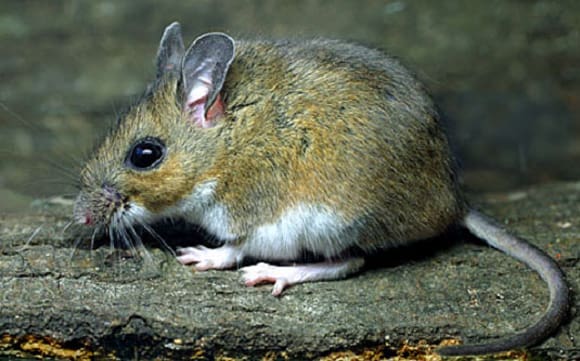
White-Footed Mouse

Dietary Needs and Behavior

They will eat a variety of foods, including insects and mollusks, but tend to prefer, like other mice, grains and vegetation.  They are a rare encounter in homes.  They are more difficult to trap than house mice, mainly because they are quite shy and do not like being in the presence of human scents.  As such, they are less likely to enter traps, however, on the plus side, the mere presence of traps (or you exploring your home and leaving your scent behind where they may want to nest) can sometimes be enough to make them vacate the premises.  The white-footed mouse is very timid.

“I’m staying up here. It reeks of human down there. Bad.”

The North American Deer Mouse (Peromyscus maniculatus)

There are around 5 dozen species of deer mouse, but the ones we’re most focused on in this entry are the North American Deer Mice, which are native to,  you guessed it, North America, unlike many other species that are invasive or have been spread by commerce through the ages.  Like the white-footed mouse, they are also known for carrying infectious diseases like hantavirus and Lyme disease, and in fact, the two species are closely related and look almost identical.  Deer mice do typically have slightly longer tails that are multicolored, and all deer mice have a white underbelly and white feet.

Deer Mouse

Needs and Behavior

These northwest mice are equally suited to living underground or in trees, though the most common place for them to nest is in the hollows of trees, far above the ground.  Their nests will typically be made from vegetation, unlike house mice, which will make nests of various debris, even synthetic materials found in your home (like mattress stuffing or insulation).  Deer Mice are opportunists and will nest with various materials, but by far prefer vegetation, and have a distinctly less mobile social procedure.  They are more likely than house mice to nest perpetually and interbreed.  Also unlike house mice, deer mice are less aggressive and will live in territories that overlap with the territories of other deer mice.  Their interactions with one another in these territories is frequent and usually not confrontational.

Population Building

They can breed year-round, but breeding is dependent on food reserves/supply.  They prefer seeds and grains when abundant, but during various seasons will change their diet to include certain insects and even fungus.  Of note is that they tend to breed all year in our Willamette Valley region, where they survive in the woods and brush quite well and have an ample water supply.  Deer mice prefer open areas and woodlands, and do not create runs the way voles or rats often will.  Another distinction is that deer mice mate less frequently than house mice.  Pregnant females give birth between 3-4 weeks after conception, having 3-4 young in their litter (though that number can range from 1 to 9), and they’ll do this 4-5 times a year.  A successful nest can rear as many as 45 young in a year.  Males will typically stick around and raise the litter, unlike house mice.  Their willingness to inbreed combined with remaining males, however, makes deer mice a species than can populate an area quite fast, when one considers the reproductive maturation rate of the offspring, at about 7 weeks.  Exiting juveniles, seeking to create their own territories, seldom stray beyond about 500 feet from their birthplace.

Suspect You Might have Mice?

Our region is very well suited to mice and if your neighborhood has experienced problems with mice, there’s a good chance it will in the future, as well.  If you suspect you have a mouse problem, call in the experts!  Bug Zapper Pest Control deals with rodents daily, and our strategy for ridding your home of these pests can speak for itself.  Your home is different from the homes that surround it, and every mouse infestation concerns unique details that need to be taken into consideration to stage a successful treatment plan.  We’ll customize a mouse removal plan that suits the details of your home and surrounding environment.  While there are many kinds of northwest mice, there is always one, great solution:  Give us a call and we can rid your home of mice in no time!

5 Star Mouse Control Service available in Albany, Ashland, Corvallis, Eugene, Grants Pass, McMinnville, Medford, Newberg, Roseburg, Salem, Sherwood, Wilsonville, Woodburn, Tigard, Tualatin and surrounding areas.

Call or Text

(541) 636-0146

For Information Today!

Locally owned pest control with same day service— 100% guaranteed!

Learn More
Read Article

Filed Under: Pest Control

Rats in Oregon: Understanding Rodents in the Pacific Northwest

July 1, 2024 by Jacob Lander

Let’s talk about rats in Oregon. Rats in the Pacific Northwest can spread incurable diseases, pilfer our food, and invade our homes, all while doing all of this covertly. They are extremely suited to living off of us, and their success with this is at least as old as written record.

While pet rats can be a joy, undomesticated rats are a danger and can populate an area, like your home, in very little time. Worse, they can spread to and from the homes around you quickly, becoming a big problem for your entire neighborhood.

It is our hope that in providing some information on these pests, we can help you understand how they take advantage of you, which sort of pest you’re dealing with, and what to do about it.

“Carl? Which- which one of us is Carl? Wait, am I Carl?”

A Little Background on Rodents

While a great many pests call the Pacific Northwest their home, most are seasonal and are not active outside of their usual breeding and nesting season. Rodents are not like these and are active year-round. 

While they do tend to proliferate in the spring and summer, we are most likely to encounter them in the fall and winter, when the change in weather forces them to seek out shelter and infiltrate our homes. Various rodents have somewhat different dietary needs and look for specific sorts of food, but most are opportunists and will take what they can get.

Rodents, as we know them, have been in the fossil record for about 54 million years, and are now distant cousins to rabbits. The best-known rodent group is the Murids, which have given rise to almost all of our modern pest species, including rats, mice, voles, and even hamsters. 

It can be said that rats have benefitted from human civilization even more than dogs and cats. In this series, we’ll be focusing on rodents common to our region, and in this article, we’ll start with the most notorious of them, the rats.

Identifying the Northwest Rats

Rats have a long history of taking advantage of human advancement and have been pests to us for a very long time. The common method of rats following human trade routes and living off human civilizations is called commensalism and is at least several thousand years old. Both Norway rats and Black Rats are commensal and commonly survive by depending on human activity. 

In this blog, we’ll go over the Pacific Northwest rats you’re most likely to encounter here, in Oregon.

Norway Rats (Rattus Norvegicus)

Originally from the areas that are now Mongolia and northern China, Norway rats have been a major, invasive pest, and have now made their home all over the world, wherever they’ve managed to stow away with humans. Norway rats go by a variety of names, and you may know them by any of the following names: 

  • Wharf Rat
  • Norwegian Rat
  • Brown Rat
  • Street Rat
  • Common Rat
  • Sewer Rat 
“Your human tongues are neat. This is sarcasm.”

Distinct Features

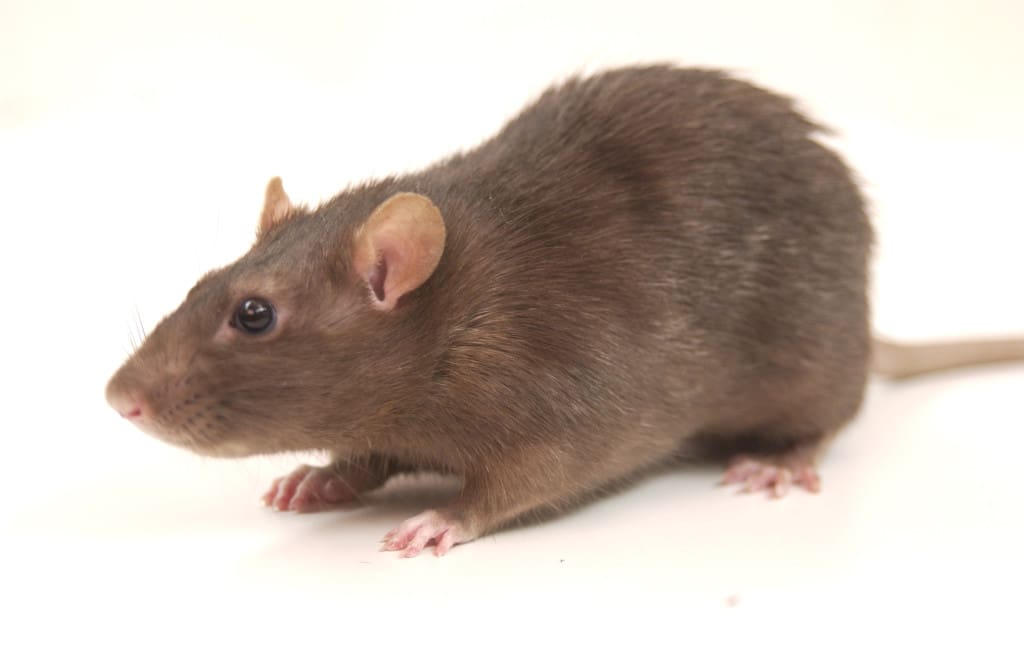
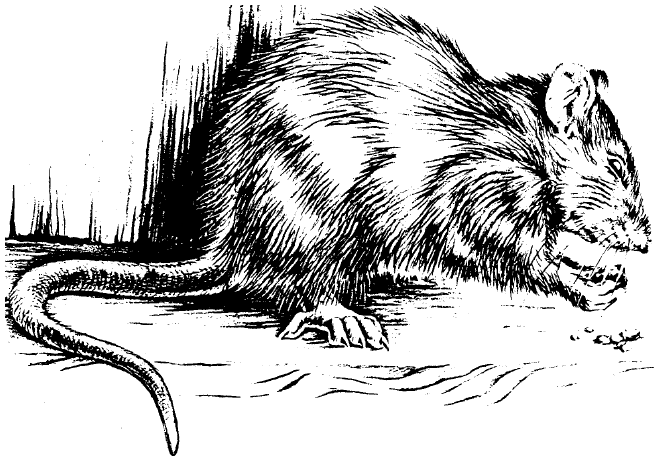
A Norway rat is typically gray or brown, with a pale underbelly, sporting a rounded snout, coupled with petite ears that sit closely together. Its tail, distinctively thicker at its base, has a scaly texture, and is somewhat bare. 

This tail is typically shorter than the rat’s body and exhibits shades of pink or tan. Furthermore, the Norway rat often displays a robust, coarse fur coat, setting it apart from other rodent species.

Diet and Hydration

This gray or brown rat will eat just about anything edible, but like us, prefers a balanced diet. Norway rats will eat various grains, meat, fruits, nuts, and snails. 

They have a rather large need for water, needing around an ounce of water each day. If they can find moist foods, this water need can lessen. The perfect place to find much of what they need, while balancing their nutrition needs, is in human garbage, hence why they do so well in our shadow and will likely follow it forever. 

We inadvertently create a great rat hotel and amazing rat buffet wherever we go. It’s the perfect setup for them.

“I’ve seen you mating. D-“

Habits and Behavior

Norway rats are primarily nocturnal, but they do venture out during the day, especially if they’re traveling in a dark place, like the walls, crawlspaces, or attic of your home. These Northwest rats tend to travel daily, from their food source, within an area between 100 and 150 feet in diameter. 

That’s usually well within the confines of your home, and they don’t travel far from their food. These gray or brown rats are colorblind and have poor vision, relying heavily on their keen sense of smell and extremely accurate sense of taste. 

They can reportedly detect changes in taste at .5 parts per million, which is incredible. In comparison, human beings can only detect 10 parts per million, which means we don’t even place in the Taste Olympics as far as rats are concerned.

Life and Reproduction

After conception, Norway rats give birth in a little over three weeks and can conceive again the very next day, if they’re so inclined. They have 6-12 young at a time. That’s fast and worse, the offspring themselves can already reproduce three months later. Now you’re starting to see how these little brown rats can dominate an area pretty quickly and easily.

Black Rats (Rattus Rattus)

Admittedly, there’s only a slim chance you’ll ever encounter a black rat in Oregon, but they do exist. The black rat has been found in Portland, Salem, and smaller coastal cities where there is human habitation. They go by various names:

  • House Rat
  • English Rat
  • Ship Rat
  • Roof Rat 

Like Norway rats, black rats have now spanned the globe. Though they made their way into Europe long before Norway rats, they have been displaced as the dominant rat in those regions by the Norway rat, which has proven very successful at invading new regions and taking over. 

The black rat or rattus rattus (real creative, scientists) also reached North America a couple of hundred years earlier than Norway rats, but again, have been displaced by the latter. They survive especially well in tropical regions, but in North America, now have only small numbers.

Black Rat

Distinct Characteristics

Black rats have longer tails than Norway rats and are not simply black. Some can be light brown, and even reddish. They are typically smaller on average than Norway rats. Their sense of hearing is highly refined and sensitive, and they are easily alerted to the sounds of humans. 

Diet and Hydration

Like Norway rats, black rats will eat just about anything they find that is edible, but are far less concerned with bulk feeding. When possible, they will sample many foods present, and eat small amounts of each, rather than eating one thing until full. 

They have a particular preference for fruits and nuts, and require about half as much water as Norway rats, at around half an ounce a day. They are also more likely to forage in groups.

Black Rat

Habits and Behavior

Black rats are arboreal, which means that they favor trees and originally weren’t so suited to human homes. However, homes have roofs, and black rats like those heights (we call them roof rats for a reason). They’ve been known to travel over power lines to get into homes, though they will burrow underground if the conditions require it. As should be obvious, they are extremely good climbers.

The Bubonic Plague

These Northwest rats can also carry a variety of diseases, some of which are incurable in humans. Black rats are known to carry a number of pathogens, of which the bubonic plague, typhus, Weil’s disease, toxoplasmosis, and trichinosis are the best known. They can transmit disease by droppings and urine, bites, and the fleas and mites in their fur. 

The most infamous of these diseases, the Black Plague or Black Death, was actually spread by Oriental rat fleas, which lived on the rats. The heavy rat population and poor sanitation practices in the Middle Ages exponentially increased the chances of contagion. 

Black Death outbreaks occurred many times in European history, but the most notorious outbreak happened over an eight-year period in the 14th century and killed up to an estimated 200 million people.

Life and Reproduction

Black rats can mate year-round and typically average around eight young per litter, which is more than Norway rats, although Black rats tend to mate less frequently. Their young also take a bit longer to become reproductive than those of Norway rats, which gives the latter an edge in dominating an area. 

Black rats proliferate in warmer climates but don’t handle cold very well, which is another reason Norway rats have often been able to run them out of town.

Packrats (many species, but particularly Neotoma Cinerea)

Also known as the bushy-tailed woodrat (for their squirrel-like tails), the packrat has many distinguishable traits and features, but the most well-known is their penchant for building complex nests out of things they find.

Distinct Characteristics

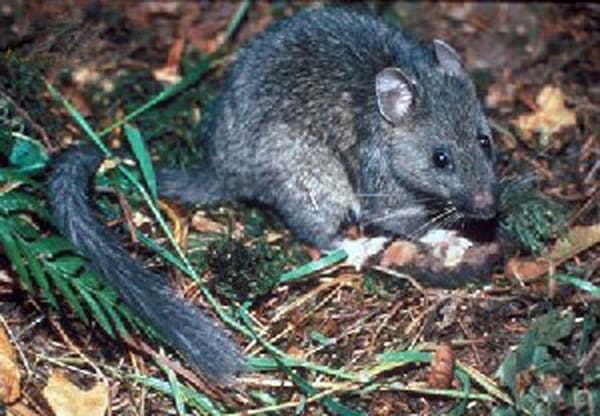
Packrats have large ears and somewhat long, flat tails. Males are much bigger than females, and they are excellent climbers and jumpers. Unlike Norway rats and black rats, packrats are perfectly at home in colder environments, and they live quite well even in Northernmost Canada. They are also found in hot climates, such as the desert region of Arizona, though prefer the upper mountain regions, which are typically colder.

Like other rats, they do not hibernate and will forage and eat year-round, though they do try to store up food reserves so they can remain in their nest during the colder months.

“I took your keys last night.”

Diet and Hydration

They are herbivores, but will occasionally eat insects and other kinds of meat, favoring leaves and stalks of plants. They will also eat fruits, fungus, and seeds. Of interest is that packrats do not need a source of open water, as their hydration needs are met through their solid food diets. 

They have sharp claws and can chew through very dense material. It is not uncommon to find they have chewed straight through your wall to get into your kitchen. We’ve seen one chew a large hole through a dense city garbage can, tunnel through trash bags and the trash within, and then gnaw their way out the other side, all in a single night. 

Habits and Behavior

Unlike other rats, which will generally build a small nest of typical materials like wood, paper, and general debris, packrats favor shiny objects and are highly curious. They take things from our homes and use them to build complex, large nests, which are sealed by a secretion the packrat makes called “amberat”. 

This substance preserves the nests, and anything in them, for extremely long periods of time. Think centuries. Plant matter from hundreds of years ago can be preserved in packrat nests, which makes them both fascinating thieves and nature’s museum curators. Packrats even have favorite items that they somewhat bond with, objects they will protect and with which they will travel. 

As these items are not crucial to their survival or needed much, packrats can be said to be materialists, really, and would almost seem to have a rudimentary sense of ownership. This bushy-tailed woodrat will even drop off needed foods in order to then pick up and steal off with something fascinating, like a belt buckle or a key.

Packrats are also fiercely territorial and very aggressive to other rodents, and when necessary, fight often, even with their own mates. Males abandon bred females when their litter is quite young, owing to their territorial nature.

Pack Rat

Life and Reproduction

Packrats do not breed year-round, unlike Norway rats or black rats. They breed in the spring and summer and can conceive a mere 12 hours after giving birth. It is not uncommon for a female to be nursing her young while also pregnant with her next litter. 

Despite this, they take about five weeks to give birth, which is substantially longer than the other rats. In addition, these northwest rats usually only have around three young per litter, and reproduce between 1-2 times a year. The young are not able to reproduce until about a year old. 

Due to these factors, packrats are very slow to multiply and populate when compared to the other rats in this list. It is no surprise that we encounter enclaves of packrats far less often than other rat species. They are also solitary and do not like the presence of other Packrats.

Having Rat Trouble?

Rats are everywhere, even in the lovely state of Oregon. If your neighborhood has experienced rodent problems in the past, it’s highly likely you might have a run-in with them in or around your own home. 

If you suspect you have a rat problem, call in the experts. Bug Zapper Pest Control deals with rats daily, and our strategy for eliminating these pests from homes and residences has proven itself time and again.

Each home is different, and every infestation concerns unique details that need to be taken into consideration to stage a successful treatment plan.

data:image/gif;base64,R0lGODlhAQABAAAAACH5BAEKAAEALAAAAAABAAEAAAICTAEAOw==

Bug Zapper Guarantee


Give us a call and we’ll have you rat-free in no time!

5 Star Rat Control Service available in Albany, Ashland, Corvallis, Eugene, Grants Pass, McMinnville, Medford, Newberg, Roseburg, Salem, Sherwood, Wilsonville, Woodburn, Tigard, Tualatin and surrounding areas.

Call or Text

(541) 636-0146

For Information Today!

Locally owned pest control with same day service— 100% guaranteed!

Learn More
Read Article

Filed Under: Pest Control

Carpenter Ant Identification & Prevention Tips

July 1, 2024 by Jacob Lander

Carpenter ants can cause dangerous and costly damage. Identifying carpenter ants and taking early preventative measures can go a long way in securing your home.

Ants: they’re not the ideal roommate, and you certainly don’t want to see them hovering around your pantry. But while some species of ants are more of an aesthetic nuisance, carpenter ants can do dangerous and costly damage to your home. Thankfully, there are key steps you can take to identify carpenter ants and to prevent them from taking up residence in your house.

Meet The Carpenter Ant

The Pacific Northwest is home to nearly a dozen species of carpenter ant – talk about the stuff of nightmares – but, thankfully, most can be treated in the same manner. The black carpenter ant, Camponotus pennsylvanicus, is the most common type of carpenter ant found in residences across the country. However, in the Pacific Northwest, you’re most likely to encounter C. modoc, one of the larger species of carpenter ants. And when these little guys make their way into your home, they can do pretty significant damage.

Read More: Ant And Termite Identification

Tiny Pests, Big Impact

While carpenter ants don’t pose much of a health risk to humans, and aren’t known to be common disease vectors, they can be unsightly, ruin food sources, and cause serious damage to structures. An infestation to crucial support beams, joists, and flooring can undermine the structural stability of your home, and could cause major problems if the ants are left to proliferate. And because carpenter ants grow their nest as their colony expands, carpenter ant infestations can be quite extensive, with extermination and repair being both costly and difficult. Thankfully, knowing how to identify carpenter ants and implement preventative measures can go a long way in preventing these pests from taking up residence in your home.

Too Much Of A Wood Thing

As you might have guessed based on their name, the favored building material of carpenter ants is wood. In particular, carpenter ants prefer dead, damp wood, as moisture and high humidity is crucial for the survival of eggs – and, therefore, the growth of the colony. And because damp wood is also easier to chew through, high-moisture areas of your home could quickly become a nest for carpenter ants.

Tunneling Through Your Home

Although wood is not a food source for carpenter ants, it is an excellent building material for their tunnels and galleries. Carpenter ants tunnel through wood with their strong mandibles, and at certain points within the tunnel system, they construct large galleries – open spaces and rooms. These galleries function as space for storing materials, wood dust, and even personnel, and can also serve as separate entrances to the nest. And while carpenter ants prefer to nest in trees, your house can also be an excellent place for them to colonize. Thankfully, there are some steps you can take to prevent carpenter ants from taking up residence in your home.

Contact vegetation is the most common method of entry for carpenter ants.

Entry Methods Of Carpenter Ants

Carpenter ants can enter your house in many ways, including through contact vegetation or gardening materials. Thankfully, there are a few ways you can reduce the likelihood of carpenter ants making their way into your home.

Contact Vegetation

Contact vegetation is the most common method of entry for carpenter ants. Contact vegetation includes shrubs, branches, and other plants that make physical contact with your home. For example, carpenter ants might use climbing vegetation, like ivy, to make their way into a structure. Eliminating the contact vegetation is a good preventative step – and don’t limit removal to the ground-level perimeter. Make sure you remove contact vegetation at your upper walls, eaves, and roof as well.

Catching A Ride

Sometimes, carpenter ants can be brought into your house via materials, including:

  • Gardening woods, like bark and mulch
  • Raw, untreated building materials
  • Firewood
  • Landscaping turf
  • Transplanted trees or large shrubs

Since all of these entry methods will keep ants close to a food source – like outside vegetation or a food source within your home – carpenter ants could very easily remain in your house for an extended stay. Inspecting materials prior to installation is a good idea, and can help prevent a possible infestation.

Prevention Tips

There are some key steps you can take to make your home unappealing to carpenter ants. Like us, carpenter ants need a source of food and water, and because of their preference for damp wood, they prefer to nest in moist areas. A general sanitation plan, combined with moisture reduction, can be quite effective at reducing the desirability of your home for carpenter ants. Some key steps to basic sanitation and moisture control include:

  • Put food away: Make sure grains, sugary foods, and especially pet foods are kept in sealed containers far from suspected entry points.
  • Reduce moisture levels: Carpenter ants are often discovered in bathrooms and kitchens, so ensure any available water sources are tidied and managed closely. This can involve drying out moist cabinets, or keeping an eye on pet food and water dishes.
  • Stop any leaks: Roof and plumbing leaks are common water sources for carpenter ants, so repairing these is a crucial step in preventing them from taking up residence in your home.

Carpenter ants can cause a great amount of damage to your home. By taking a few preventative steps, you can make your home a less desirable place for them to take up residence.

Call In The Experts

Early preventative measures can go a long way in ant-proofing your home. But if you’re already seeing carpenter ants in or around your house, contact us today to schedule an inspection. We’re here to help, and we offer a 100% guarantee on all of our services.

If you need an inspection to determine if you have bed bugs or carpet beetles contact us or give us a call to talk with our friendly and knowledgeable staff.

5 Star Pest Control Service available in Albany, Ashland, Corvallis, Eugene, Grants Pass, McMinnville, Medford, Newberg, Roseburg, Salem, Sherwood, Wilsonville, Woodburn, Tigard, Tualatin and surrounding areas.

Call or Text

(541) 636-0146

For Information Today!

Locally owned pest control with same day service— 100% guaranteed!

Learn More
Read Article

Filed Under: Pest Control

Northwest Rodents – Pt. 3: The Outliers

July 1, 2024 by Jacob Lander

In this third and final part to our series on rodents in the Pacific Northwest, we’ll focus on the outliers, or, those rodents not as commonly encountered in or near our homes.  Specifically, we’ll be taking a look at the voles, nutria, and porcupines.  Most people will not have domestic run-ins with these critters (though voles can be common in property surrounded by woods or broad fields), but they can still pose a problem and be difficult to handle.  Let’s learn a little about these interesting rodents and what makes them tick.  There are links within the article that will lead you to places in which you can learn more specifically about trapping, baiting, and exclusion methods for dealing with any of these rodents as problem pests, but for our purposes, we’ll focus more on what they do and what it means to you and your home.  Being northwest rodents, gophers could also be included on this list.  To that effect, we have an informative article covering gophers here.
Disclaimer:  Bug Zapper Pest Control does NOT currently handle problems with nutria, voles, or porcupines.  This article is designed to give you some information on these rodents, as well as some advice on how to tackle the problem.

Northwest Rodents in Your Garden:  Voles (genus Microtus)

“I want to make something that looks like a jelly bean with hair on it.”  -Nature

Voles  are small, semifossorial (subsisting both below and above ground) rodents that somewhat resemble rats and mice.  They are sometimes called Meadow Mice or Field Mice, though are more closely related to muskrats or lemmings than mice.  Voles can range in color, though are typically small (a little larger than mice), and have short, mole-like limbs with a stubby tail.  They often dig extensive tunnels in yards and especially gardens, through which they travel in search of various foods.  When it comes to northwest rodents, voles are the jack-of-all-trades, and can adapt to varying conditions with ease.  A common behavior of voles is to dig a series of scavenging tunnels and then travel between them above-ground.  If you’ve got a variety of holes in your yard and garden, without the presence of a mound or hill above each hole, you’ve likely got a vole problem.  While there are nearly two dozen different types of voles in North America, our customers are most likely to encounter the Oregon Vole (aptly named Microtus oregoni).

Small Vole

The Oregon Vole is around 5.5 to 6.5 inches long with a bicolored tail that can contain any number of color combinations.  Oregon Voles are particolored with the most common coloring a greyish yellow to brownish yellow.  They usually have a darker underbelly that will often have areas of yellow or white in it.  They do not hibernate, and can be found scavenging any time of the night or day.  They tend to propagate in small groups, but have been known to create very large, complex habitats with big populations, too.  Generally, they stick to about a fourth of an acre and don’t range much beyond that.  They do not typically live long, and have an average lifespan of a little over a year, provided nothing interferes with their activities.  They can procreate any time of the year, though prefer Spring and Summer, and are able to breed on average 5 or so times in a year, having between 3-8 young in each litter.  Pregnancy lasts about 3 weeks, and the young mature in another 3 weeks.  The speed at which they can procreate can greatly boost their numbers when food is plentiful and they are not hindered by location, predators, and weather.  They prefer grassy and brushy areas and are far more common in the forested regions of the Pacific Northwest.  They also like to infest clear-cut areas, somewhat like open fields.  While they prefer plant matter, and will make a buffet of your garden, they also enjoy eating insects and snails, and have even been known to eat dead animals and roadkill.

Pictured: Rodent Applebee’s

Pest control for voles requires a daily regimen of trapping, or several other methods of control that necessitate frequent attention.  There are many ways to control a vole infestation.  Trapping can work well on small populations (but not large), baits and/or toxicants can be used, including repellants, and there are ways to protect your young trees and certain plants using exclusion methods.  For a good outline of these methods, check out the Internet Center for Wildlife Damage Management, and their information on vole management.

Northwest Rodents in Your Creek:  Nutria (Myocastor coypus)

A nuclear nutria family.

Nutria (or coypu) were not originally northwest rodents, but have done quite well in our more watery ecosystems.   Originally South American in origin, nutria were introduced to Oregon in the 1930’s, and as such, are relatively new to the area.  Their numbers and prevalence will likely grow over time.  They are larger rodents (closer in size to beavers than rats, mice, or gophers) and they can be found usually in areas with rivers and streams, as nutria are semi-aquatic.  They are excellent swimmers and are often mistaken for beavers (which are also rodents), due to their body construction, habitat, and size.  One key difference visible from a distance is the tail of a nutria.  Nutria have bodies that are somewhat beaver-like, but tails that are wiry and long, being much more rat-like.  They nest in banks brushy areas, and always near a habitable water-source.  While they can adapt to a great many habitats, they definitely prefer, and do better in, freshwater wetlands and marshes.

Nutria are dark-colored and average about 2 feet long.  They have bright orange incisors near the front of their mouths, and long whiskers.  Cornering a nutria is a bad idea, as they can be quite violent and will bite and claw to get away, usually back to water.  Once in, they can remain submerged completely for up to 10 minutes at a time.  They are most active at dusk, though will often sunbathe and swim in the late afternoon or early evening.

Nutria in Water

They can damage habitats because of their taste for plants that typically hold soil together, causing stream-banks to crumble and erode faster.  The burrowing they do within these banks certainly doesn’t help matters.  Nutria often carry parasites that can spread to other animals quickly, and can also carry a number of pathogens that make them dangerous to people and other animals.  Oregon state law allows for a variety of trapping/baiting/control methods.  For a time, they were considered a food source and there are many nutria recipes online, though the fad has certainly diminished greatly since the 60’s, when it was more popular.

There are several ways to deal with nutria.  Oregon law allows for them to be shot if outside city limits, and live-traps can be purchased.  For protecting your trees, brush, and property from nutria, fences and wire mesh can work very well, as nutria cannot climb.  If your property contains a stream or river, however, they may still be able to burrow into your yard if you don’t exclude them correctly.  Here’s an official Washington State guide to some of the ways nutria can be managed, if you’re having trouble with them:  http://wdfw.wa.gov/living/nutria.html

Northwest Rodents in Your Woods:  Porcupines (Erethizon dorsatum)

My name literally means “spiny pig” because the people who name things are rude.

The North American Porcupine, sometimes called a ‘quill pig’ or Canadian porcupine, is common in the pacific northwest, and especially in the coastal woodland regions.  They are caviomorphs, being related to capybara, chinchillas, guinea pigs, and another rodent on our list today, nutria.  Out of all the North American rodents on our list, porcupines possess the highest intelligence and easily live the longest, at around a decade.  They are excellent climbers due to their long claws and nimble bodies, and can be seen at all times of day or night (though are more prevalent at night).  The size of a small-to-mid-sized dog, and covered with quills, porcupines can be a startling sight if you’ve never run into one before.  They are the second largest rodent in North America (second only to the beaver).  They are between 2-3 feet long, with a long, “furry” tail (smaller, densely packed quills).  They have tens of thousands of quills on their bodies, each one having microscopic barbs that can help the quill to dig deep into the porcupine’s attackers.

Porcupines run their own piercing studios.

Porcupines are herbivores, preferring to eat bark, harder and more fibrous plant matter, antlers, and also twigs, flowers, and berries.  They prefer woodlands, and especially areas near wetlands, though they can also be found (though rarely) in rocky or dry, desert-like habitats.  Contrary to popular belief, the porcupine cannot “shoot” its quills out.  They will fan out and make the porcupine look much larger when it is threatened, as a defensive characteristic, but they cannot be fired out of its body.  The way these spines end up in other animals is due primarily to the other animal rubbing or pushing against them.  The quills are strictly defensive.  Another popular thought about porcupines is that they are related to hedgehogs.  This is due to both animals having a quill-like appearance, but the two are not closely related at all (hedgehogs are omnivores and are far more closely related to moles than porcupines).

“Hedgehogs are pompous, anyway. We make fun of them at all the awesome insectivore parties.”

Another interesting aspect of porcupine life is their patient reproductive cycle.  They mate only in the late year, from November to December, will carry their young for 7 months, and give birth to only one new offspring.  This reproductive cycle keeps the porcupine from being as prevalent as many of the other rodents we’ve covered.  The mating procedure involves a complex dance performed by the male, which culminates into a finale that includes the male urinating on the female’s head.

“Don’t look at me like that.  Nothing you do is any better.”

They typically cannot overrun an area by reproducing, especially since they have a variety of predators, like larger birds of prey, coyotes, and even dogs.  Due to their solitary nature, even the risk of being run over in the road can be a significant control for their numbers in an area.  If you are having a porcupine problem (perhaps injuries to your pets), there are several methods for controlling them near or within your property or yard.  A good place to start is with exclusion or trapping.  Information on these methods can be found here.

That said, if you’re having trouble with some of the more typical rodents, like rats or mice, we can definitely handle that for you.  Bug Zapper Pest Control deals with rodents daily, and our strategy for ridding your home of these pests can speak for itself.  Your home is different from the homes that surround it, and every mouse or rat infestation concerns unique details that need to be taken into consideration to stage a successful treatment plan.  We’ll customize a mouse removal plan that suits the details of your home and surrounding environment.

5 Star Pest Control Service available in Albany, Ashland, Corvallis, Eugene, Grants Pass, McMinnville, Medford, Newberg, Roseburg, Salem, Sherwood, Wilsonville, Woodburn, Tigard, Tualatin and surrounding areas.

Call or Text

(541) 636-0146

For Information Today!

Locally owned pest control with same day service— 100% guaranteed!

Learn More
Read Article

Filed Under: Pest Control

Why Indoor Pest Treatment?

July 1, 2024 by Jacob Lander

Who can dispute the beauty of Oregon? Wild scenic beach vistas, majestic fir trees, picturesque streams and the smell of wild ripe blackberries in Summer. These are just a few of the reasons we have chosen to make Oregon our home. But, Oregon’s wild open spaces attract a lot of creatures including bugs, spiders, ants, rodents and other annoying pests. Having professional indoor pest treatment can allow you to enjoy the natural beauty without having to share your home with pests.

How Pest Control Treatments Work

Industrial strength pro grade pest control products are different than over the counter insecticides sold at hardware or farm stores. Top quality pest control products applied by our trained pros intercept bugs as they travel into the home. Instead of killing on contact, Pro grade products used by our licensed professionals leave a long lasting barrier that pushes bugs away and kills bugs crossing through treated zones.

How To Get Rid Of Insects Fast

After working at thousands of homes across the West Coast, we have observed the effects of an indoor pest treatment on the overall success of a home pest protection plan. While we respect completely the wishes of each homeowner regarding what areas of the home are to be treated, here are a few reasons why we strongly suggest including both the interior and exterior areas of the home as part of an initial bug clean out treatment.

  1. Pro products repel bugs – Sometimes when only the interior is treated as part of the initial service, bugs trapped inside the home start moving around to escape the treatment. When only the exterior is treated homeowners often comment after the treatment, “I’ve never seen this many bugs inside my home before.”
  2. Treat where bugs travel for faster results – Treating cracks, crevices, corners and other areas within the home where ants, spiders and other bugs hide and travel allow our pest killing products to be contacted quickly by pests. Direct contact accelerates pest elimination. When bugs directly enter treated  zones, they won’t have long to live!
  3. Attention to detail leads to success – Like so many other things in life, attention to the details determines success. When it comes to pest elimination, attention to the details ultimately determines the speed and level of success achieved. Only treating the exterior just leaves to many stones upturned where pests can hide within the home and often results in less than optimal results.

What About Safety

So you want the bugs gone fast, but maybe having an indoor pest treatment has raised concerns about the safety of your family and pets. Is it possible to have the interior of the home treated without having to worry about the safety of children and pets?

We lead out in pet and people friendly pest control. Recent technology advances and innovative product development have led to pest control products that eliminate pests in a people and pet friendly manner.

Generally following a few simple safety precautions will help ensure the success of the treatment completed. We recommend covering pet food and water dishes, allowing treated areas to dry completely before contact and avoiding treatment during mealtimes to protect the safety of your family

Each of our great technicians is trained to carefully assess the home for safety concerns prior to starting a treatment. They will advise if the interior of your home can be safely treated and what precautions should be taken to protect your family and pets. Please discuss any safety concerns you might have with your technician prior to determining if an indoor pest treatment is right for your home.
How Often To Treat Indoors

When top grade products are used, a very detailed exterior pest treatment lasts two months. In contrast, an interior pest treatment done annually is generally sufficient to provide pest free living. Just in case you are curious, here is a little technical info about why indoor pest treatment is not needed as often as exterior treatment.

The following are top things that break down pest control products and decrease their effectiveness:

  • Photo Degradation – sunlight can break down some pesticides and decrease their effective duration.
  • Microbial Degradation – soil microorganisms such as bacteria and fungi use pesticides as part of their food supply, they decompose or break down the products that kill bugs.
  • Chemical Degradation – some pesticides break down in the soil through natural chemical reactions. Chemical degradation generally involves reactions such as oxidation, reduction, and hydrolysis, and it occurs more quickly in warm, moist soil. Soil pH can also affect the rate of chemical degradation.
  • Adsorption To Soil & Organic Matter – soil particles and organic matter can tie up the pesticide and make it less available for killing pests when contacted.

These degrading factors primarily impact treatments completed in an outdoor setting. Pest products applied indoors will largely be buffered from the impact of these outdoor degradation factors. Without the adverse effects of outdoor elements, indoor pest treatments can maintain effectiveness for many months.

To avoid over treatment, we recommend indoor pest treatment when service begins and then on an as needed basis. One insect crossing over a treated area may be seen within a home prior to it’s death. Generally, when insects are found repeatedly within the same room of a home, an indoor re treatment should be scheduled.

Indoor Pest Treatment Warranty

Now with the help of our team, you can enjoy all the beauty of Oregon without having to share your home with nasty bugs and pests. Living a bug free life starts with a complete interior and exterior pest treatment for your home.
We’re so confident in the quality of our service that we warranty 100% the effectiveness of all out pest treatment plans. If you find bugs within your home, we’ll provide a complete indoor pest treatment at no additional charge. Trust the Bug Zapper Team to keep your home bug free inside and outside!

Locally owned for fast, exceptional service.

5 Star Pest Control Service available in Albany, Ashland, Coos Bay, Corvallis, Eugene, Grants Pass, McMinnville, Medford, Newberg, Roseburg, Salem, Sherwood, Wilsonville, Woodburn, Tigard, Tualatin and surrounding areas.

Call or Text

(541) 636-0146

For Information Today!

Locally owned pest control with same day service— 100% guaranteed!

Learn More
Read Article

Filed Under: Pest Control

  • « Go to Previous Page
  • Page 1
  • Page 2
  • Page 3
  • Page 4
  • Page 5
  • Interim pages omitted …
  • Page 7
  • Go to Next Page »

612 SE Jackson St Ste #12 
Roseburg, OR 97470
541-636-0146
Pests Service areas Commercial Plans & pricing
Pay bill About us Contact us FAQs