
 |
 |
 |
 |
 |
Tired of ants raiding the pantry or spiders staking a claim in the garage? You’re not alone; a recent survey found that 85% of homeowners reported trouble with pests in their home over the past year. Reclaiming your home doesn’t always require an expensive professional visit, and you are not alone in this fight.
According to the 2019 American Housing Survey, approximately 14 million housing units in the United States reported seeing roaches. You can save money and use eco-friendly solutions to reclaim your space with the right approach.
This guide will walk you through five core strategies: blocking entry points, maintaining cleanliness, using natural repellents, applying safe control methods, and performing regular maintenance. Let’s get started on fortifying your home against common household invaders.
Why Choose DIY Pest Control?
The most immediate benefit of handling pest control yourself is the significant cost savings. By taking a DIY approach, you can invest in a set of supplies that provide comprehensive coverage for the long term, offering protection throughout the seasons with a one-time or occasional purchase.
This hands-on method also gives you direct control over your home’s pest management strategy, enabling you to take immediate action the moment you spot a problem or notice the first signs of activity. You become empowered to address issues on your own timeline, responding to pest concerns as they arise and maintaining constant vigilance over your living space.
The flexibility of DIY pest control means you can intervene at any hour, whether it’s early morning or late at night, and adapt your approach based on what you observe in real-time. This level of personal involvement allows you to learn about pest behavior patterns in your specific environment and tailor your prevention strategies accordingly.
Here’s a quick side-by-side comparison to help you weigh professional services against a DIY plan:
| Approach | Avg. Cost/Year | Response Speed | Product Choice Control | Best For |
| Professional | $300–$550 | Next-day | Limited (licensed chemicals) | Severe infestations |
| DIY | $60–$100 | Immediate | Full (natural/pet-safe) | Preventive & mild issues |
Beyond the budget, DIY offers unmatched convenience and customization. You can tackle a developing ant trail at 10 PM on a Tuesday or choose pet-safe and child-friendly products that fit your family’s needs. You can even personalize natural repellents with scents you enjoy, like peppermint or lavender.
Understanding Pesticide Poisoning and Emergency Response
While DIY pest control empowers you to protect your home safely, it’s crucial to understand the risks associated with pesticide exposure and know how to respond in an emergency. Pesticide poisoning can occur through skin contact, inhalation, ingestion, or eye exposure, and symptoms may range from mild irritation to severe reactions depending on the product and exposure level.
Understanding the progression of symptoms is critical for appropriate response; the table below breaks down warning signs by severity level, from mild to life-threatening.
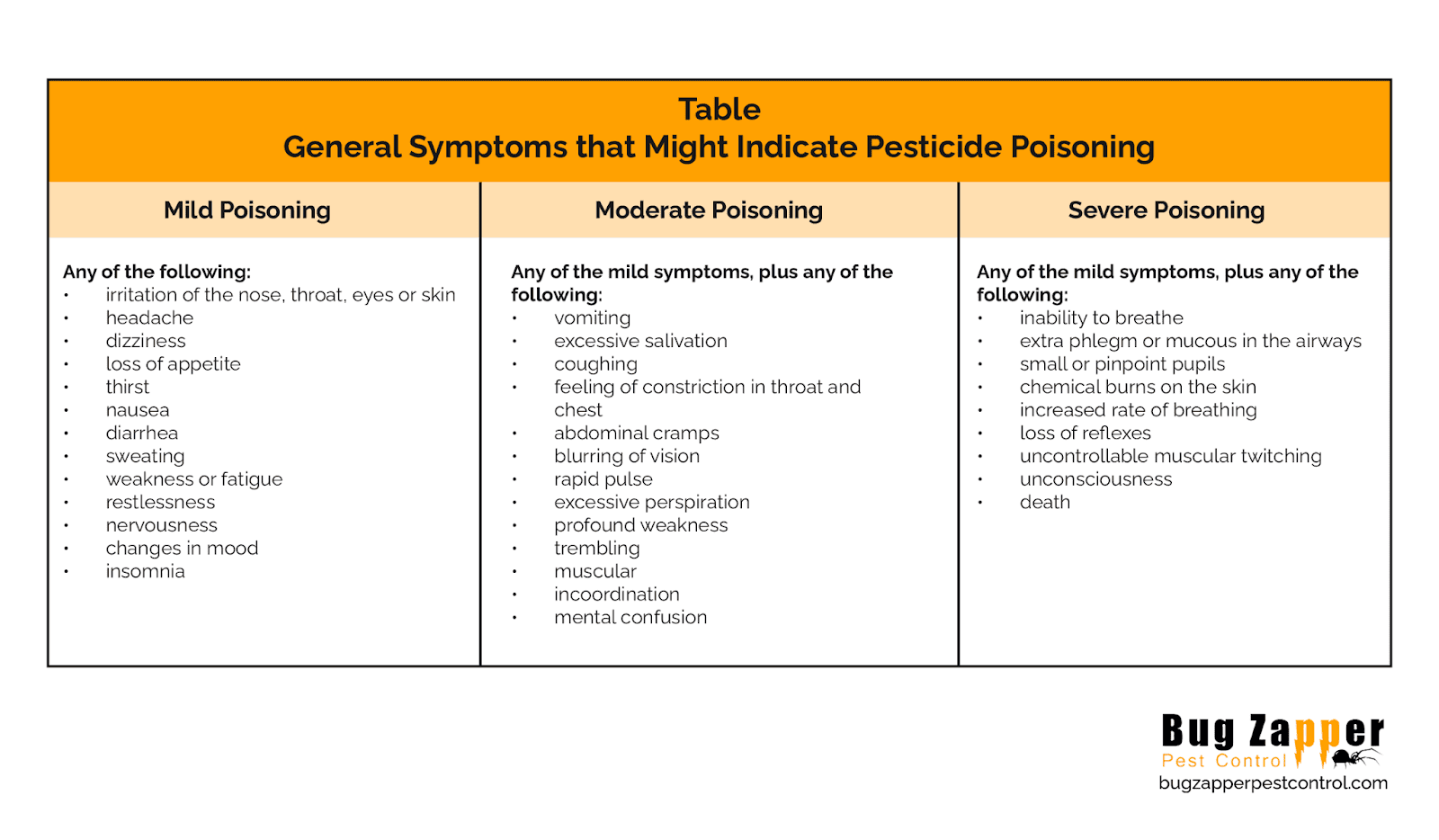
Early warning signs include skin rashes or burns, excessive salivation, nausea or vomiting, difficulty breathing, dizziness, headaches, or blurred vision. If you or a family member experiences any of these symptoms after pesticide exposure, act immediately.
First, move the affected person away from the contaminated area to fresh air. If the pesticide contacts skin or clothing, remove contaminated garments carefully and wash the affected area with soap and plenty of water for at least 15 minutes.
For eye exposure, flush eyes continuously with clean water for at least 15 minutes while holding eyelids open. If ingestion is suspected, do not induce vomiting unless specifically directed by poison control.
Keep the pesticide label or container with you and call the National Poison Control Center immediately for expert guidance. For severe reactions such as difficulty breathing, seizures, or loss of consciousness, call 911 without delay.
Prevention is always your best defense; store all pesticides in their original labeled containers in a locked cabinet away from children and pets, never transfer products to unmarked containers, avoid applying pesticides on windy days, and always follow label instructions precisely regarding mixing, application rates, and re-entry intervals.
By respecting these products and preparing for emergencies, you can confidently manage your pest control needs while keeping your household safe.
Essential DIY Pest-Control Toolkit
Building an effective DIY pest control arsenal doesn’t require a trip to a specialty store; most items are readily available online or at your local hardware store. The beauty of DIY pest management is that you can assemble a comprehensive toolkit gradually, prioritizing items based on your specific pest pressures and budget.
Before you begin any treatment, always remember to read product labels carefully, they contain critical information about mixing ratios, application rates, safety precautions, and re-entry intervals. Never skip wearing the appropriate Personal Protective Equipment (PPE) for every application, even when using products labeled as “natural” or “low-toxicity.”
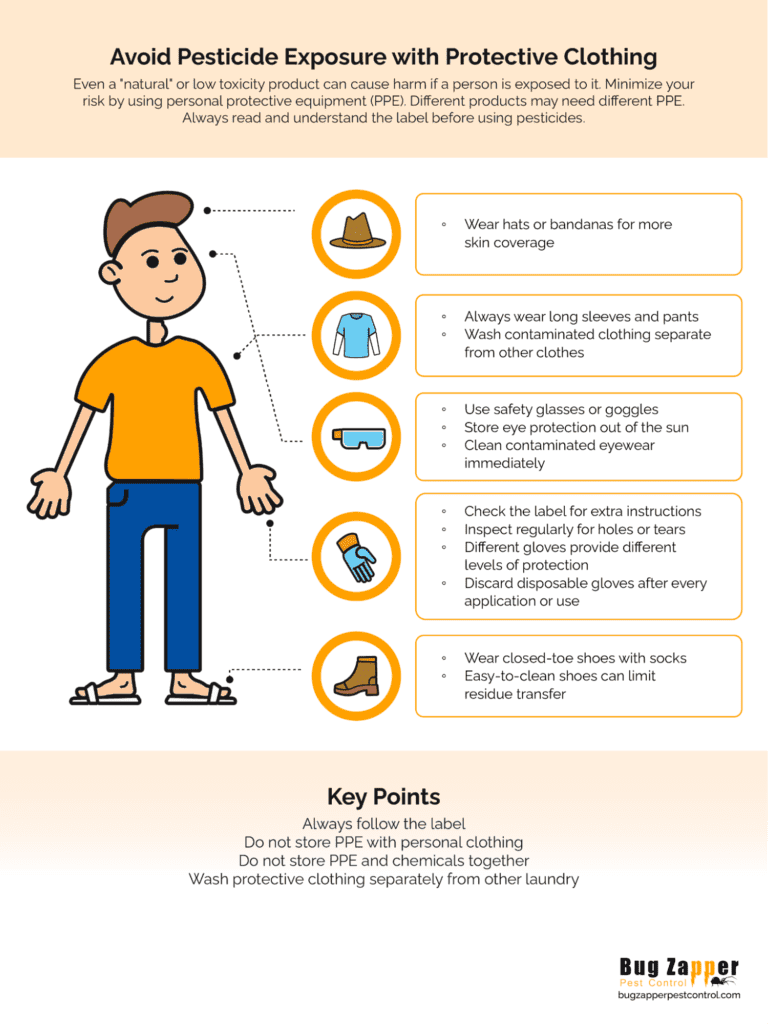
The visual guide below reinforces these safety practices by outlining essential PPE for pesticide applications, hats or bandanas for added skin coverage, long sleeves and pants, safety glasses or goggles, chemical‑resistant gloves, and closed‑toe shoes with socks.
It also highlights key habits: always follow the label, inspect gear for damage, discard disposable gloves after each use, and store and wash protective clothing separately from everyday laundry.
Here are the key items you’ll need, along with practical selection tips:
PPE (Personal Protective Equipment)
Chemical-resistant gloves, splash goggles or safety glasses with side shields, and a mask or respirator rated for pesticide use (look for N95 or P100 ratings depending on the product).
Always wear long sleeves, long pants, and closed-toe shoes during application. Keep a dedicated storage bin for your pest control PPE to avoid cross-contamination with everyday items, and replace gloves at the first sign of tears or degradation.
Pump Sprayer with Adjustable Fan Tip
A 1–2 gallon capacity sprayer is ideal for perimeter and baseboard applications. Choose a model with an adjustable nozzle that allows you to switch between a fine mist and a coarse stream, giving you control over coverage and drift.
A translucent tank with clear volume markings makes accurate mixing straightforward, and a pressure-relief valve adds an extra layer of safety. Look for sprayers with replaceable seals and nozzles to extend the tool’s lifespan.
Hand Duster
Essential for precise, low-volume applications of dry dusts like food-grade diatomaceous earth (DE) or boric acid into cracks, crevices, and wall voids. A quality duster features a narrow applicator tip and controlled air-release mechanism, allowing you to deliver a light, even layer without over-applying or creating airborne clouds. Bulb dusters are affordable and effective for most homeowners.
Gel Baits and Bait Syringes
Gel baits delivered via syringe applicators allow you to place pea-sized dots in hidden, high-traffic areas like cabinet hinges, appliance gaps, and behind baseboards. Choose formulas labeled specifically for your target pest, sugar-based baits work well for many ant species, while protein or grease-based options attract roaches.
Bait stations keep gel fresh, protect it from dust and moisture, and prevent accidental contact by children or pets. Rotate bait active ingredients every few months to reduce the risk of resistance.
Sticky Glue Boards and Monitoring Traps
These non-toxic tools are indispensable for tracking pest activity and confirming the success of your treatments. Place glue boards along walls, behind appliances, under sinks, and in garages or basements.
Date each trap with a permanent marker so you can measure trends over time. For pantry pests like Indian meal moths or flour beetles, add pheromone traps to detect and monitor population levels early.
Granular Spreader (Handheld)
A small, handheld broadcast or rotary spreader makes outdoor perimeter applications quick and even. Use it to distribute granular insecticides or natural repellent granules along foundations, in mulch beds, and around landscape features. Adjustable flow-rate settings help you avoid over-application and wasted product.
Exclusion Supplies
This category is your first and most important line of defense. Stock silicone or latex acrylic caulk for sealing small cracks, expanding foam for larger voids, copper mesh or stainless steel wool for rodent-proofing larger gaps, door sweeps for exterior and garage doors, and adhesive-backed weatherstripping for windows and door frames. Keep a caulking gun, utility knife, and wire cutters handy for quick repairs.
Basic Tools
A reliable flashlight or headlamp, a small inspection mirror for checking under appliances and behind fixtures, a sharp utility knife for opening packaging and trimming foam or weatherstripping, a measuring cup and funnel for accurate mixing, a permanent marker to label dilution dates and ratios on spray bottles, a dedicated mixing bucket, and paper towels or trash bags for cleanup. These simple tools will streamline every step of the process.
Outdoor Extras
Heavy-duty yard refuse bags for collecting leaf litter and debris, bypass pruning shears for trimming vegetation away from the foundation, a gutter scoop or trowel for clearing clogs, and a stiff brush for cleaning door thresholds and window tracks.
Reducing outdoor harborage, overgrown vegetation, piles of leaves, stacked wood near the house, dramatically lowers pest pressure before it reaches your doorstep.
Quick Application Guide
Use pump sprayers for liquid perimeter treatments and interior baseboard applications. Deploy gel baits and bait syringes in kitchens, bathrooms, and high-traffic pest areas where you’ve observed activity.
Apply dust with a hand duster in wall voids, electrical outlet boxes (with power off), and hard-to-reach cracks where moisture and humidity are low. Position sticky traps and glue boards for ongoing monitoring and to confirm that your control measures are working.
Use exclusion materials to seal identified entry points and prevent re-infestation. When in doubt, start with monitoring and exclusion, then layer in targeted chemical or natural treatments based on what you observe.
Strategy 1 – Block Pest Entry Points
One of the most effective pest control strategies is exclusion. If pests can’t get in, you don’t have to fight them. Most insects and rodents can squeeze through impossibly small cracks, so a thorough inspection and sealing of your home’s exterior is the critical first line of defense.
Inspect Doors, Windows & Vents
 |
Your home’s openings are superhighways for pests. Start by checking for light visible around door frames and under thresholds. If you see light, pests can get through. Here are three critical checkpoints to seal these entry routes:
|
Seal Foundations & Exterior Walls
 |
Walk the perimeter of your home and look for any cracks or gaps where utilities like pipes, cables, and electrical lines enter. Sealing a half-inch gap around a cable line can significantly reduce the number of ants you see indoors. Use silicone caulk for small cracks and expanding foam for larger gaps. |
Attic & Crawl-Space Defenses
 |
These less-visited areas are common entry points. Ensure attic vents are securely screened. In crawl spaces, a properly installed moisture barrier can drastically reduce humidity, making the area less attractive to pests like cockroaches. |
Strategy 2 – Keep Your Home Clean to Avoid Pests
Pests are motivated by three things: food, water, and shelter. By systematically removing these attractants through diligent cleaning and maintenance, you make your home a much less inviting target. A clean home is a pest-free home.
Eliminate Food Sources
 |
These less-visited areas are common entry points. Ensure attic vents are securely screened. In crawl spaces, a properly installed moisture barrier can drastically reduce humidity, making the area less attractive to pests like cockroaches. |
Remove Standing Water
 |
Many pests, including cockroaches and silverfish, thrive in high-humidity environments. Fix leaky faucets and pipes immediately. Use a dehumidifier in damp basements or crawl spaces to make the environment less hospitable for unwanted guests. |
Yard Maintenance
 |
Your yard can serve as a staging ground for pests. Keep shrubs and tree branches trimmed back at least two feet from your home’s exterior. A clear perimeter prevents pests from using foliage as a bridge to your siding and windows. |
Pet Areas
 |
Pet food and water bowls are a major attractant. Implement a simple nightly routine of washing pet bowls, wiping up spills, and storing leftover food in a sealed container. This small habit makes a big difference. |
Strategy 3 – Use Natural Repellents Against Pests
For those who prefer a chemical-free approach, nature provides a powerful arsenal of repellents. These solutions are safe for use around children and pets when handled correctly. They can be highly effective for managing minor pest issues and preventing future ones.
Essential-Oil Recipes
 |
Many essential oils contain compounds that pests find irritating. Peppermint oil is a fantastic all-around repellent for spiders and ants. Create a simple spray for countertops and baseboards. Peppermint Repellent Spray Recipe:
|
Pantry-Item Repellents
 |
You already have pest-fighting tools in your kitchen. If you see an ant trail, wipe it down with a 50/50 solution of white vinegar and water. This not only cleans the surface but also destroys the pheromone trail that other ants follow. |
Repellent Plants
 |
Incorporate pest-repelling plants into your garden or in pots near doorways and windows. This is a beautiful and functional form of pest control. |
| Plant | Pest Targeted | Sun Requirement | Companion-Planting Tip |
| Marigolds | Mosquitoes, aphids | Full Sun | Plant around vegetable gardens. |
| Lavender | Moths, fleas, flies | Full Sun | Place near patios and entryways |
| Mint | Ants, spiders | Partial Shade | Keep in pots to prevent spreading. |
Natural repellents require more frequent application than their chemical counterparts. Plan to re-apply sprays every 5–7 days, or after heavy rain outdoors. While generally safe, always keep essential oils out of reach of children and pets.
Strategy 4 – Use Safe Pest-Control Methods
When repellents aren’t enough, you may need to step up to solutions that eliminate pests. Thankfully, there are many effective and low-toxicity options available that are much safer than traditional broad-spectrum pesticides. The key is to choose the right tool for the job and follow a proper dos and don’ts guide.
Natural Pesticides
 |
Food-grade Diatomaceous Earth (DE) is a remarkable natural pesticide. It’s a fine powder made from fossilized algae that scratches the pest’s waxy exoskeleton, causing it to dehydrate. Apply a very thin layer in areas where you see pests, like behind appliances and under sinks. |
Eco-Friendly Traps
 |
Sticky boards or glue traps are a simple, non-toxic way to monitor and control pest populations. Place them along walls in kitchens, garages, and basements where pests travel. This can help you identify hotspots and target your other control efforts more effectively. |
Targeted Baits
 |
For social insects like ants, targeted baits are incredibly effective. The foraging ants carry the bait back to the colony, sharing it and eliminating the entire nest from the inside out. This approach is far more effective than just spraying the ants you can see. |
Strategy 5 – Regularly Check & Maintain Your Home
Effective pest control isn’t a one-time event; it’s an ongoing process of monitoring and maintenance. A consistent schedule of inspections will help you catch potential problems early, before they turn into full-blown infestations. A simple pest log can make this process organized and effective.
Monthly Indoor Checklist
 |
Once a month, do a quick walkthrough of pest hotspots. Look under sinks, in the back of cabinets, and behind large appliances. Use a small mirror and a flashlight to inspect hard-to-see areas where pests like bed bugs or carpet beetles may hide. |
Seasonal Outdoor Checklist
 |
Your exterior defenses need attention as the seasons change:
|
Record-Keeping
 |
Keep a simple “DIY Pest Log” on your phone or in a notebook. A sample entry might look like: “Date: Oct 15 | Pest: Ants | Location: Kitchen window sill | Action: Wiped with vinegar spray, applied DE.” This record helps you track what works and identify recurring issues. |
When to Call a Professional Exterminator
While DIY methods are fantastic for prevention and minor issues, some situations demand professional expertise. If you encounter any of the following red flags, it’s time to call in the experts:
- Structural Damage: You find chewed electrical wires or damaged wood from carpenter ants or other wood-destroying insects. This is a serious issue that can compromise structural components and warrants immediate professional assessment.
- Rapidly Multiplying Infestations: Pests like German cockroaches or bed bugs reproduce so quickly that DIY methods are often overwhelmed.
- Biting/Stinging Pests: An infestation of wasps, bees, or venomous spiders can jeopardize the health and safety of your family.
- Rodent Droppings in Food Areas: This poses a significant health risk, as rodent droppings can carry diseases and require professional-grade cleanup.
Your Roadmap to a Pest-Free Home
You now have a comprehensive, five-strategy roadmap to reclaim your home from pests: block entry points, maintain cleanliness, deploy natural repellents, apply safe control methods, and commit to regular maintenance.
The key to lasting success is consistency. Start with one small, actionable step tonight, like sealing a gap under your kitchen sink or placing a monitoring trap in a high-traffic area.
Build your toolkit gradually, follow product labels to the letter, and always wear appropriate PPE, even for natural treatments. Track your observations in a simple pest log so you can refine your approach over time.
Remember, you’re not alone in this fight; with the proven strategies outlined in this guide, you have everything you need to protect your home and family. And if a pest problem escalates beyond DIY or you’d prefer the peace of mind that comes with professional service, Bug Zapper Pest Control is here to help with same-week visits.
References
Bartok, John W. “Sprayers and Spray Application Techniques.” UMass Extension Greenhouse Crops and Floriculture Program, https://www.umass.edu/agriculture-food-environment/greenhouse-floriculture/fact-sheets/sprayers-spray-application-techniques.
Bunch, T. R., et al. “Diatomaceous Earth Fact Sheet.” National Pesticide Information Center, 2013, https://npic.orst.edu/factsheets/degen.html. Accessed 10 October 2025.
Environmental Protection Agency. “First Aid in Case of Pesticide Exposure | US EPA.” Environmental Protection Agency, 31 December 2024, https://www.epa.gov/pesticide-incidents/first-aid-case-pesticide-exposure. Accessed 10 October 2025.
Ferracini, Chiara, et al. “Performance of Pheromone-Baited Traps to Monitor the Seasonal Abundance of Tortrix Moths in Chestnut Groves.” Insects, 17 November 2020, https://pmc.ncbi.nlm.nih.gov/articles/PMC7697762/. Accessed 10 October 2025.
Mayo Clinic. “Poisoning: First aid.” Mayo Clinic, https://www.mayoclinic.org/first-aid/first-aid-poisoning/basics/art-20056657. Accessed 10 October 2025.
Metro News. “Got ants? Safer ways to prevent and eliminate this common home pest.” OregonMetro.gov, 29 March 2016, https://www.oregonmetro.gov/news/got-ants-safer-ways-prevent-and-eliminate-common-home-pest. Accessed 10 October 2025.
Mohr, Ruby, et al. “Creating Sustainable School and Home Gardens: Organic Pest Management.” https://digitalcommons.usu.edu/cgi/viewcontent.cgi?article=3518&context=extension_curall. Accessed 10 October 2025.
National Pest Management Association. “Homeowners Concerned About Pest Activity As They Return To the Workplace.” 2 September 2021, https://www.pestworld.org/multimedia-center/press-releases/homeowners-concerned-about-pest-activity-as-they-return-to-the-workplace/. Accessed 10 October 2025.
National Research Council (US) Committee on Prudent Practices in the Laboratory. “Working with Chemicals – Prudent Practices in the Laboratory.” NCBI, https://www.ncbi.nlm.nih.gov/books/NBK55872/. Accessed 10 October 2025.
Price, Martin, and Robert Walle. “Wild Marigold for Natural Pest Control and More.” ECHOcommunity.org, 3 June 2024, https://www.echocommunity.org/en/resources/de7caf73-8ef4-4e1e-9563-756f603bff0e. Accessed 10 October 2025.
Sellner, Michael, and Jordan Wicht. “How Many American Homes Have Pests?” U.S. Census Bureau, 21 April 2021, https://www.census.gov/library/stories/2021/04/how-many-american-homes-have-pests.html. Accessed 10 October 2025.
Woodward, Penny. “Pest control with plants.” Sustainable Gardening Australia, 2 September 2021, https://www.sgaonline.org.au/pest-repellant-plants/. Accessed 10 October 2025.